DIALOGUE OF THE EPOCHS: PIERRE-JOSEPH REDOUTÉ — “THE RAPHAEL OF FLOWERS”
Pierre-Joseph Redouté (1759–1840) is regarded as one of the greatest botanical artists in the history of art — a master of watercolour plant illustration whose name became synonymous with elegance and precision. His works unite scientific accuracy with refined artistic sensitivity, and his depictions of roses, lilies and exotic flora are still considered benchmarks of botanical painting today.

Portrait of Pierre-Joseph Redouté and his daughter Marie-Louise
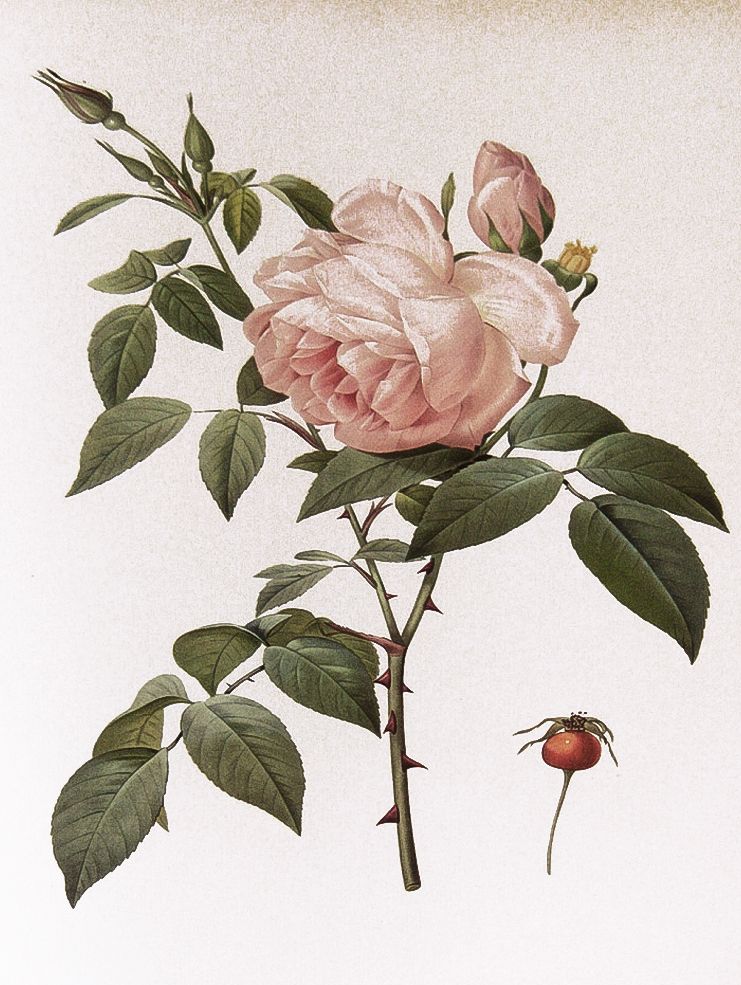
Rosa indica fragrans from
BIOGRAPHY AND EARLY LIFE
Redouté was born in the town of Saint-Hubert, in what is now Belgium, into a family of decorative painters. From childhood he was surrounded by drawing and craftsmanship, learning the fundamentals of art from his relatives. As a teenager he began travelling in search of work and experience, taking on decorative commissions across France and the Netherlands.
His move to Paris proved decisive. There he encountered the worlds of botany and scientific illustration, which would shape the course of his entire career. A key influence was the distinguished botanical painter Gérard van Spaendonck, who trained Redouté in the subtleties of watercolour technique and the disciplined accuracy required for depicting plant life. Redouté soon gained recognition and was appointed court artist to Queen Marie-Antoinette, later working for Empress Joséphine Bonaparte, an enthusiastic patron of horticulture.
Redouté worked primarily in watercolour, a medium perfectly suited to his meticulous approach. His style is characterised by luminous transparency, gentle tonal transitions and extraordinary attention to detail. Rather than copying dried specimens, he studied living plants directly, observing the curvature of petals, the veining of leaves and the delicate variations of natural colour.
He also employed stipple engraving, a printmaking technique in which images are formed from countless tiny dots rather than lines. These prints were subsequently hand-coloured in watercolour, lending them a painterly richness and subtle depth that distinguished his publications from ordinary botanical plates.
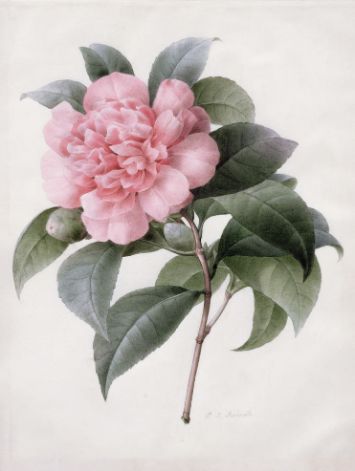
Camelia from Pierre-Joseph Redouté
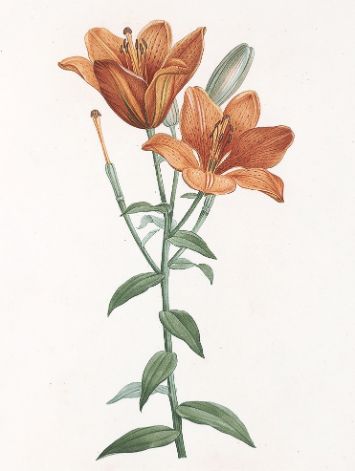
Orange Lily from Pierre-Joseph Redouté
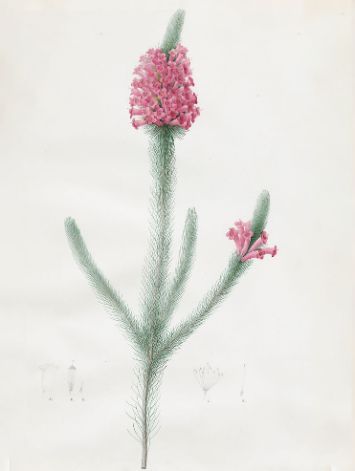
Erica Fulgida from Pierre-Joseph Redouté
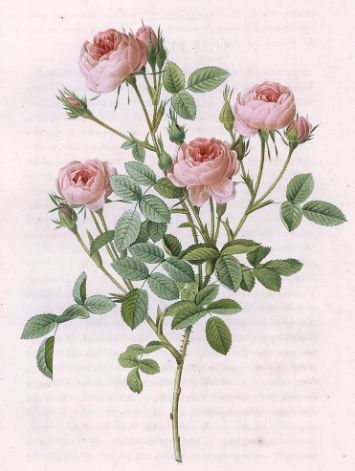
Rose de Meaux a fleurs roses from Pierre-Joseph Redouté
PAINTS AND PIGMENTS
Watercolour was Redouté’s principal medium. In the late eighteenth and early nineteenth centuries artists typically relied on natural pigments — ochres, umbers, carmine, indigo, lead whites and a variety of mineral and plant-based colourants. Many pigments were purchased from specialised colour-men in Paris, while others could be prepared by hand from ground minerals or botanical sources. Redouté’s technique involved careful layering and a restrained, transparent palette, allowing light to play through the washes rather than sit heavily upon the surface.
MAJOR WORKS
- Les Liliacées (1802–1816) — a monumental multi-volume publication featuring hundreds of illustrations of lilies, irises and other ornamental plants. It stands as one of the most ambitious botanical art projects of its era
- Les Roses (1817–1824) — Redouté’s most celebrated achievement, containing approximately 170 rose illustrations. This series is widely regarded as the pinnacle of his artistic career and remains iconic in both art and horticultural circles
- Choix des Plus Belles Fleurs — a refined collection presenting some of the most beautiful flowers known at the time, admired for both its aesthetic grace and botanical clarity

Planche de rose from Pierre-Joseph Redouté

Fritillaria Imperialis from Pierre-Joseph Redouté
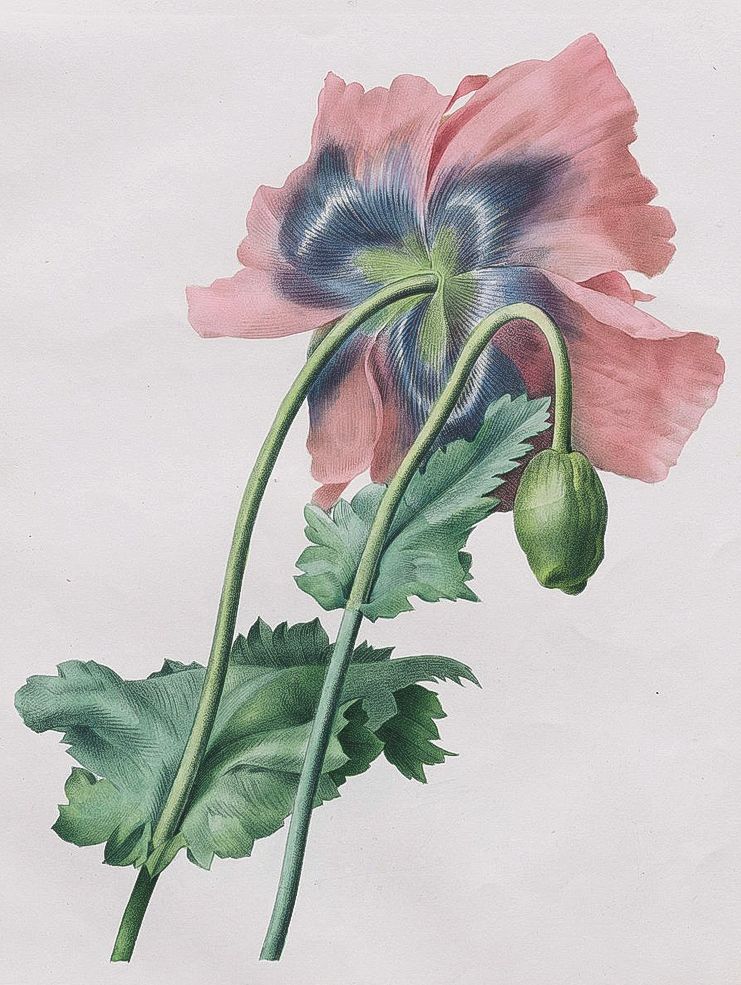
Pavot (Papaver)from Pierre-Joseph Redouté
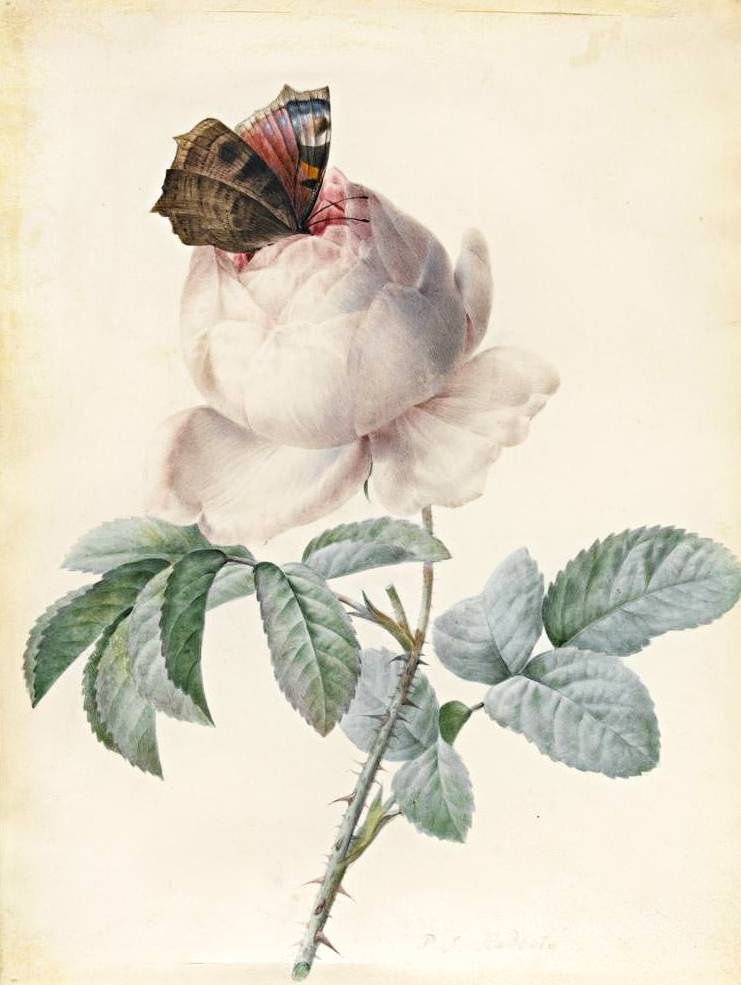
Centifolia Rose with Peacock Butterflyfrom Pierre-Joseph Redouté
INTERESTING FACTS
- Redouté preferred to work from living specimens rather than herbarium sheets, which enabled him to capture authentic colour and vitality
- He lived through several dramatic political upheavals in France yet managed to retain his reputation and professional standing
- Over the course of his life he produced more than two thousand botanical illustrations
WHERE TO SEE THE WORKS
- The National Gallery of Art, Washington
- The Morgan Library & Museum, New York
- Botanical and fine art museums throughout France and the United Kingdom
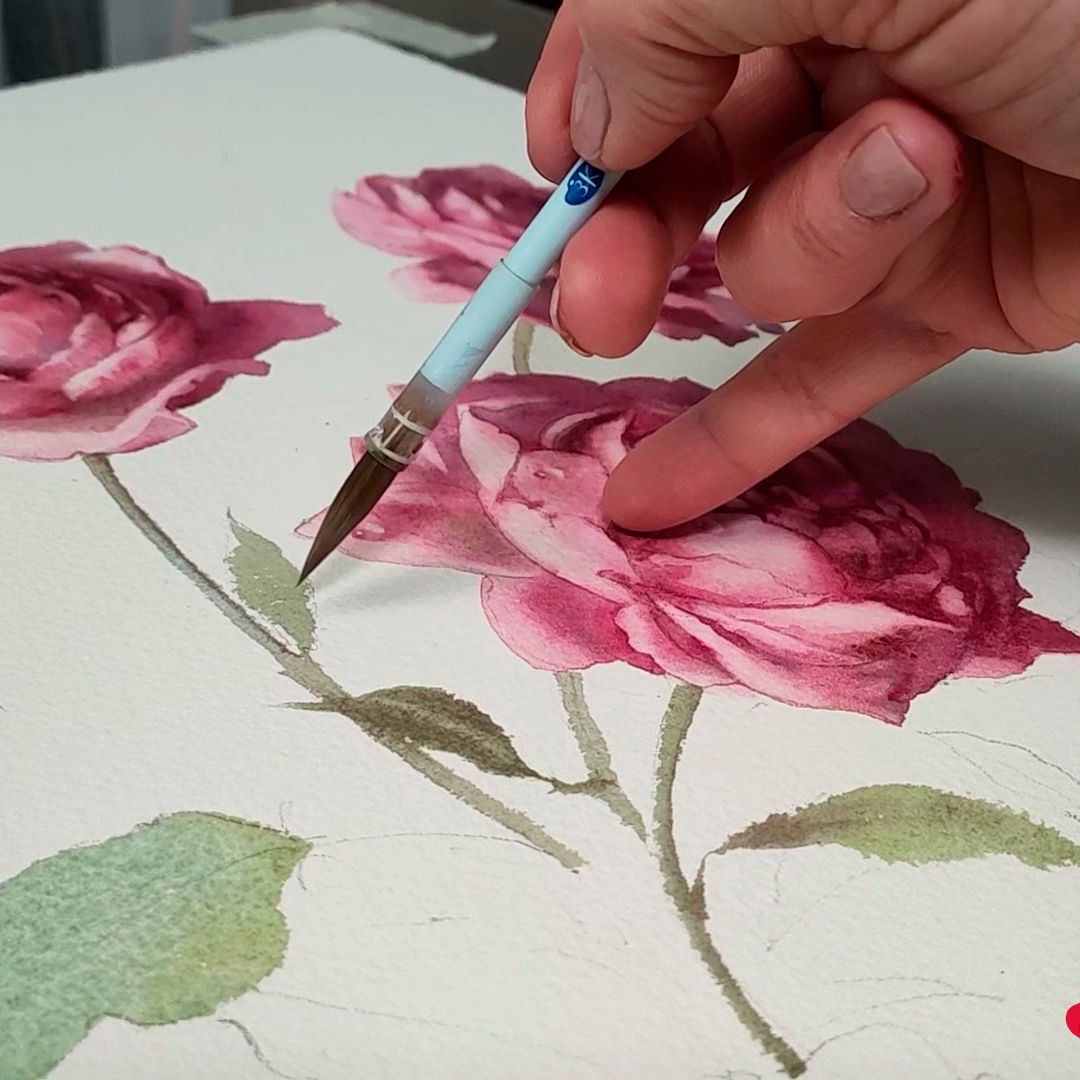
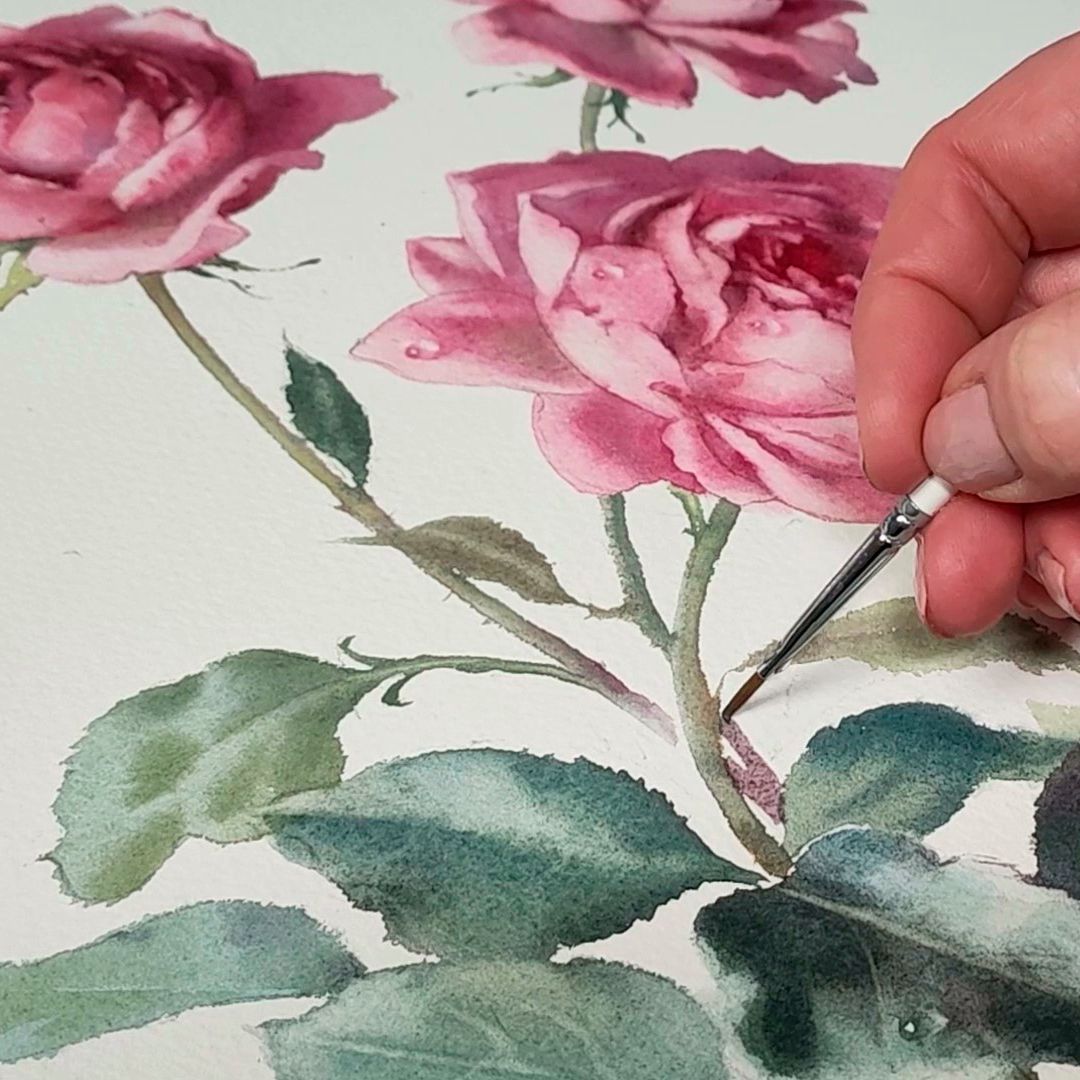
PAINTING SESSION IN ELENA BAZANOVA'S STUDIO
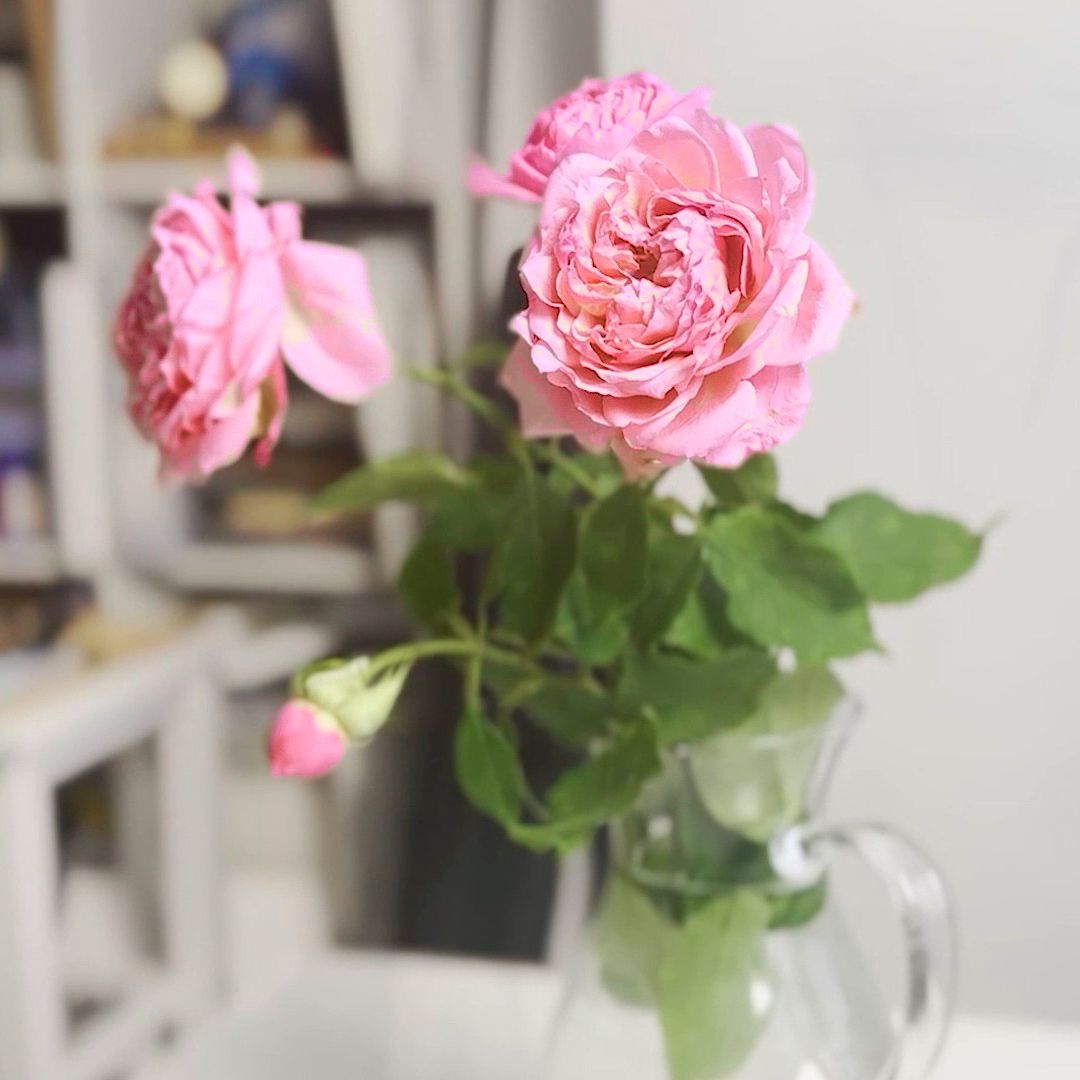


Rose of a Hundred Petals. Pierre-Joseph Redouté
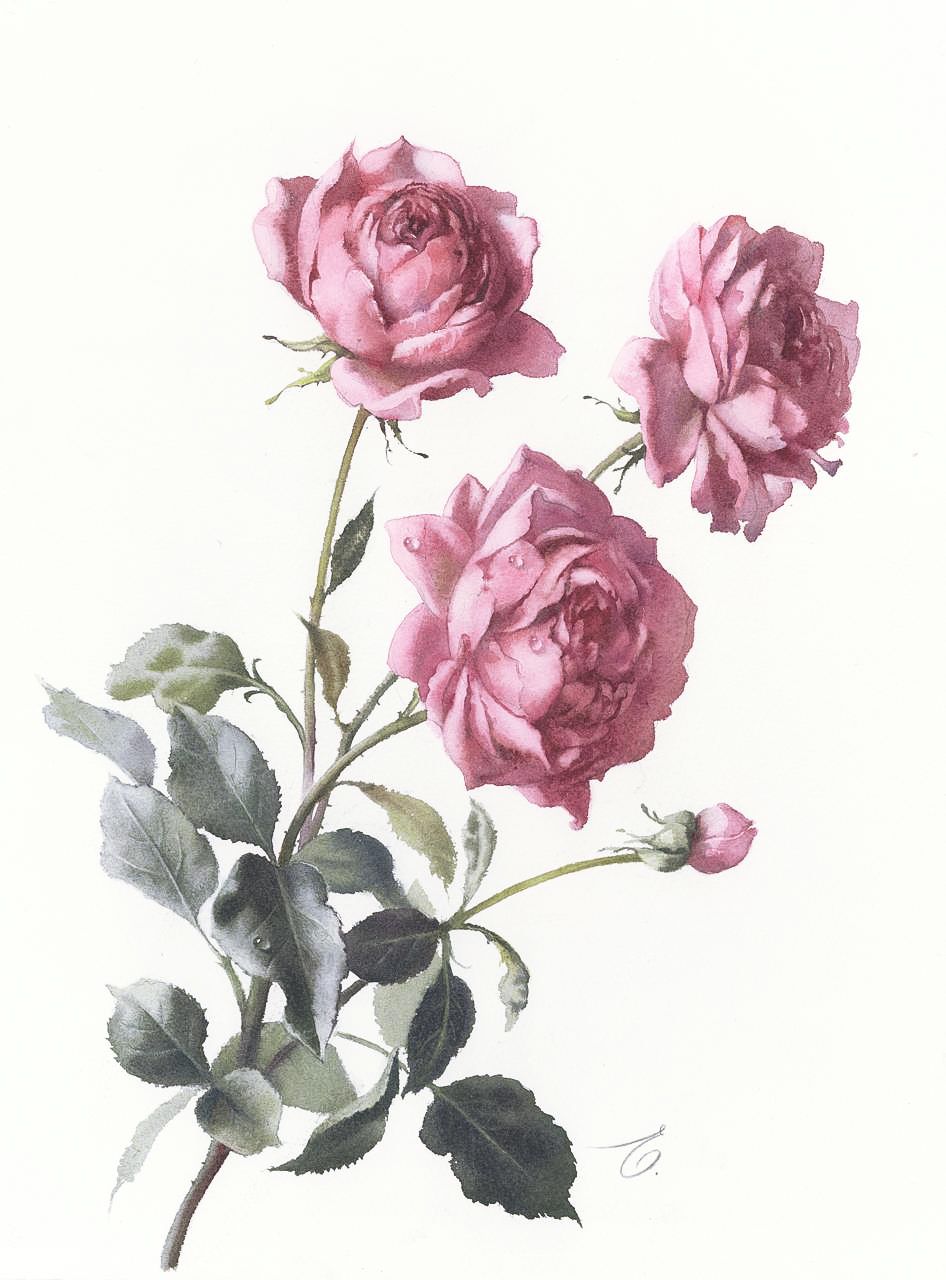
Roses. ELENA BAZANOVA
Exploring the traditions of watercolour painting and illustration practiced by the old masters is far more than a tribute to art history — it is an essential stage in an artist’s professional development. Within their works lie time-tested techniques, subtle colour solutions and a deep understanding of light, form and natural structure. By studying historical illustrations, one can observe how compositions were constructed, how transparency was achieved, and how artists balanced scientific precision with visual elegance. Such research does not encourage imitation, but rather fosters a thoughtful evolution of one’s own artistic voice.
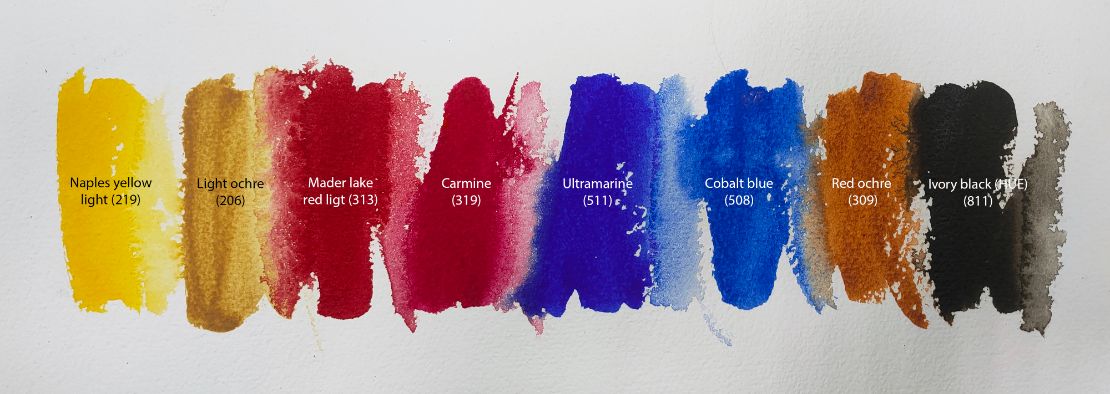
Today we will engage with this very approach alongside watercolour artist Elena Bazanova. She will assemble a selection of “White Nights” watercolour shades that resonate with the palette associated with Pierre-Joseph Redouté and create a rose illustration inspired by the works of the old master. This is not a matter of copying, but of creative reinterpretation — a meeting of historical tradition with contemporary materials and personal vision. We wish you an enjoyable viewing and the inspiration that comes from encountering the living heritage of watercolour art.
PALETTE
- 219. Naples Yellow Light (P.Y.216 *** ■△)
- 206. Light Ochre (P.Y.43 *** ◨△)
- 313. Madder Lake Red Light (P.R.187 *** □◮)
- 319. Carmine (P.V.19 *** □▲)
- 511. Ultramarine (P.B.29 ◨◮ G)
- 508. Cobalt blue (P.B.28 *** ◨△ G)
- 309. Red ochre (P.R.102 *** ◨△)
- 811. Ivory black (А) (P.R.102, P.Bk.7 *** ◨◮)

Rose petals

Rose petals in the shadows
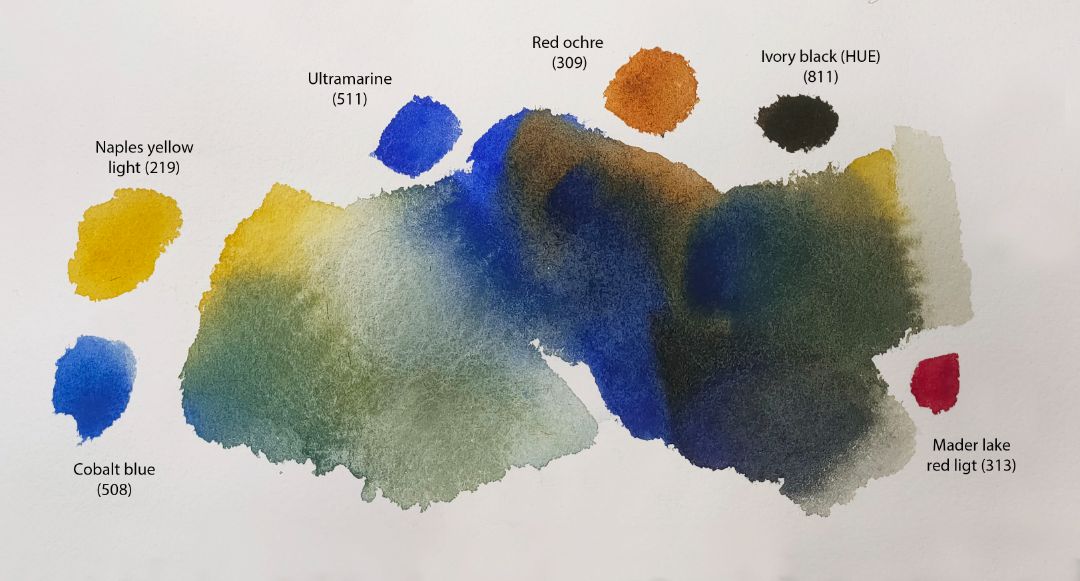
Greens
Practical study is particularly valuable, when an artist not only examines reproductions but also attempts to recreate the techniques, palettes and layering methods by hand. Through this process, a painter develops a “muscle memory” for colour, a stronger sense of proportion and greater confidence with materials. The experience of previous generations becomes a foundation upon which contemporary creativity can grow. It is, in essence, a dialogue across centuries, where artist and master are separated by time yet united by shared artistic purpose. Despite fundamental changes in science, technology and the manufacture of art materials, the core principles of colour harmony remain remarkably constant. The transparency of watercolour, the balance of warm and cool tones, and the nuanced transitions of light continue to function just as effectively today as they did two hundred years ago. For this reason, returning to classical palettes does not feel outdated; rather, it deepens one’s understanding of colour and expressive possibilities in painting. We invite you to enjoy the process!
References:
- Marianne Roland-Michel — The Floral Art of Pierre-Joseph Redouté
- Martin Rix & William T. Stearn — Redouté’s Fairest Flowers
- Original and facsimile editions of Les Roses and Les Liliacées
- Encyclopaedia Britannica — biography of Pierre-Joseph Redouté