DIALOGUE OF THE EPOCHS: KARL BRYULLOV
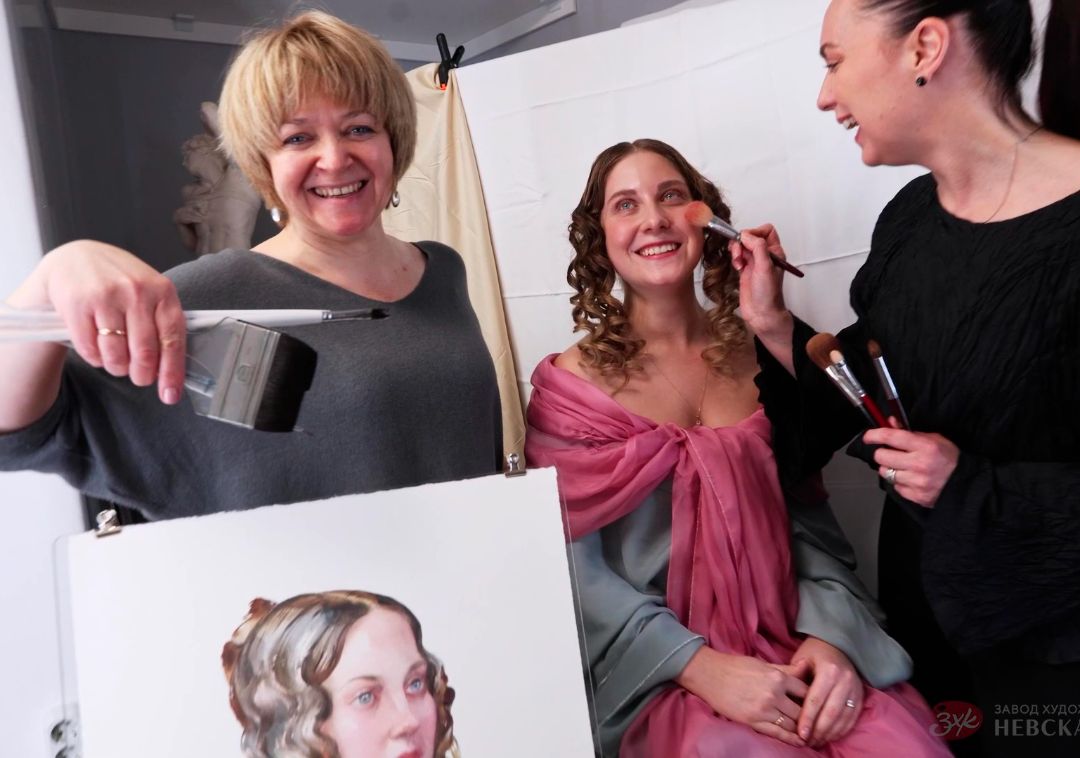
The recent portrait painting session became a unique bridge between the epochs—an immersion into the atmosphere of the mid-19th century, when the art of the Russian academic school flourished and the great Karl Pavlovich Bryullov created. That day, the spirit of the times came alive in the studio: the model, immersed in the image of a lady of that epoch, with carefully chosen makeup and costume, became a living reminder of the golden age of Russian artistic heritage.
Karl Pavlovich Bryullov (1799–1852)
An outstanding Russian artist of the Romantic era, a leading representative of the academic school, and one of the first masters to establish watercolour as an independent form of high art in Russia.
Karl Bryullov was born in St. Petersburg to an artist's family. In 1809, he entered the Imperial Academy of Arts, where he received a classical academic education. Even during this period, his virtuoso drawing skills and interest in portraiture were evident. During his stay in Italy, Bryullov actively worked in watercolour, creating portraits, genre scenes, architectural views, and sketches. It was during this period that his picturesque, rich watercolour style developed. After returning to Russia, Bryullov became a professor at the Academy of Arts. He used watercolour as a medium for intimate portraiture and artistic experimentation. Bryullov's watercolours combine academic precision with romantic expressiveness. Key features:
- drawing dominance
- saturated colour palette
- active use of paper light
- psychological depth of images
- contrast of warm and cold tones
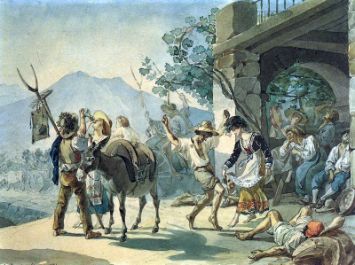
The Grape Harvest Festival

Portrait of Grand Duchess Olga Nikolaevna. 1841
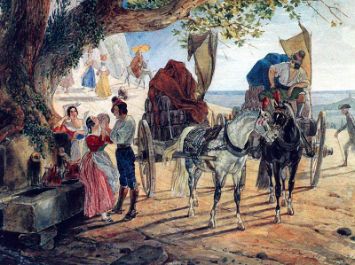
Festivities in Albano

Portrait of Captain A.M. Kostinitsa. 1835

Karl Pavlovich Bryullov. Olga Ferzen on a donkey, 1835. Paper, watercolor. The State Russian Museum, St. Petersburg, Russia

Karl Pavlovich Bryullov. Giovanina Pacini, 1831. Pencil, watercolor, paper. 21.1 x 17.1 cm. Private collection.
Palette and colour schemes
Karl Bryullov's palette was distinguished by its refinement and harmony. Below is a reconstruction of the approximate composition of his watercolour palette.
- Yellow ochre
- Red ochre
- Natural and burnt sienna
- Natural and burnt umber
- Cinnabar
- Carmine
- Natural azure (ultramarine)
- Prussian blue (Berlin blue)
- Cobalt blue
- Indigo
- Green earth
- Chromium oxide
- Madder lake
- Black bone
- Whitewash (water, lead or zinc - for tinting)
- ochre + carmine (flesh tones)
- ultramarine + sienna (shadows)
- indigo + umber (deep backgrounds)
Tools and Technique
Karl Pavlovich was distinguished by his meticulous and demanding approach to artistic tools, viewing them as an essential part of the creative process. He understood perfectly well that in watercolour painting, the quality of materials and the degree of mastery over them directly impact the expressiveness and artistic perfection of a work. In his work, Bryullov used squirrel and kolinsky brushes, which allowed him to create both soft washes and precise details. Before beginning the painting, he completed pencil drawings, distinguished by their clear construction and anatomical precision. The artist placed particular importance on thick, hand-made paper, exploiting its whiteness as an active source of light.
Among Bryullov's key techniques are working on wet-on-wet surfaces and multi-layered glazes, which ensured depth and transparency of colour. A characteristic feature of his method was also a confident first brushstroke, demonstrating the high level of professionalism and thoughtfulness of each artistic approach.
The watercolour legacy of Karl Pavlovich Bryullov occupies a prominent place in the largest museum collections in Russia and Europe and is an integral part of the global artistic heritage. His works are carefully preserved, studied, and exhibited by leading museums, confirming the enduring value of the master's work. The most significant collection of Bryullov's watercolours and drawings is housed in the State Russian Museum, where works from various periods of his career are presented. This collection allows us to trace the development of the master's artistic method and his contribution to the development of the Russian watercolour school.
Bryullov's watercolours are also housed in the State Tretyakov Gallery, where they reveal his mastery of psychological portraiture, his subtle sense of colour, and his virtuoso mastery of watercolour technique. Selected works are housed in the State Hermitage Museum, where they are examined within the context of European artistic traditions. Furthermore, Karl Bryullov's watercolours are represented in museum collections across Europe, particularly in Italy, underscoring the artist's international recognition and his significant contribution to 19th-century artistic culture.
Karl Bryullov's watercolors in museum collections
The watercolour legacy of Karl Pavlovich Bryullov occupies a prominent place in the largest museum collections in Russia and Europe and is an integral part of the global artistic heritage. His works are carefully preserved, studied, and exhibited by leading museums, confirming the enduring value of the master's work. The most significant collection of Bryullov's watercolours and drawings is housed in the State Russian Museum, where works from various periods of his career are presented. This collection allows us to trace the development of the master's artistic method and his contribution to the development of the Russian watercolour school.
Bryullov's watercolours are also housed in the State Tretyakov Gallery, where they reveal his mastery of psychological portraiture, his subtle sense of colour, and his virtuoso mastery of watercolour technique. Selected works are housed in the State Hermitage Museum, where they are examined within the context of European artistic traditions. Furthermore, Karl Bryullov's watercolours are represented in museum collections across Europe, particularly in Italy, underscoring the artist's international recognition and his significant contribution to 19th-century artistic culture.
PAINTING SESSION IN ELENA BAZANOVA'S STUDIO
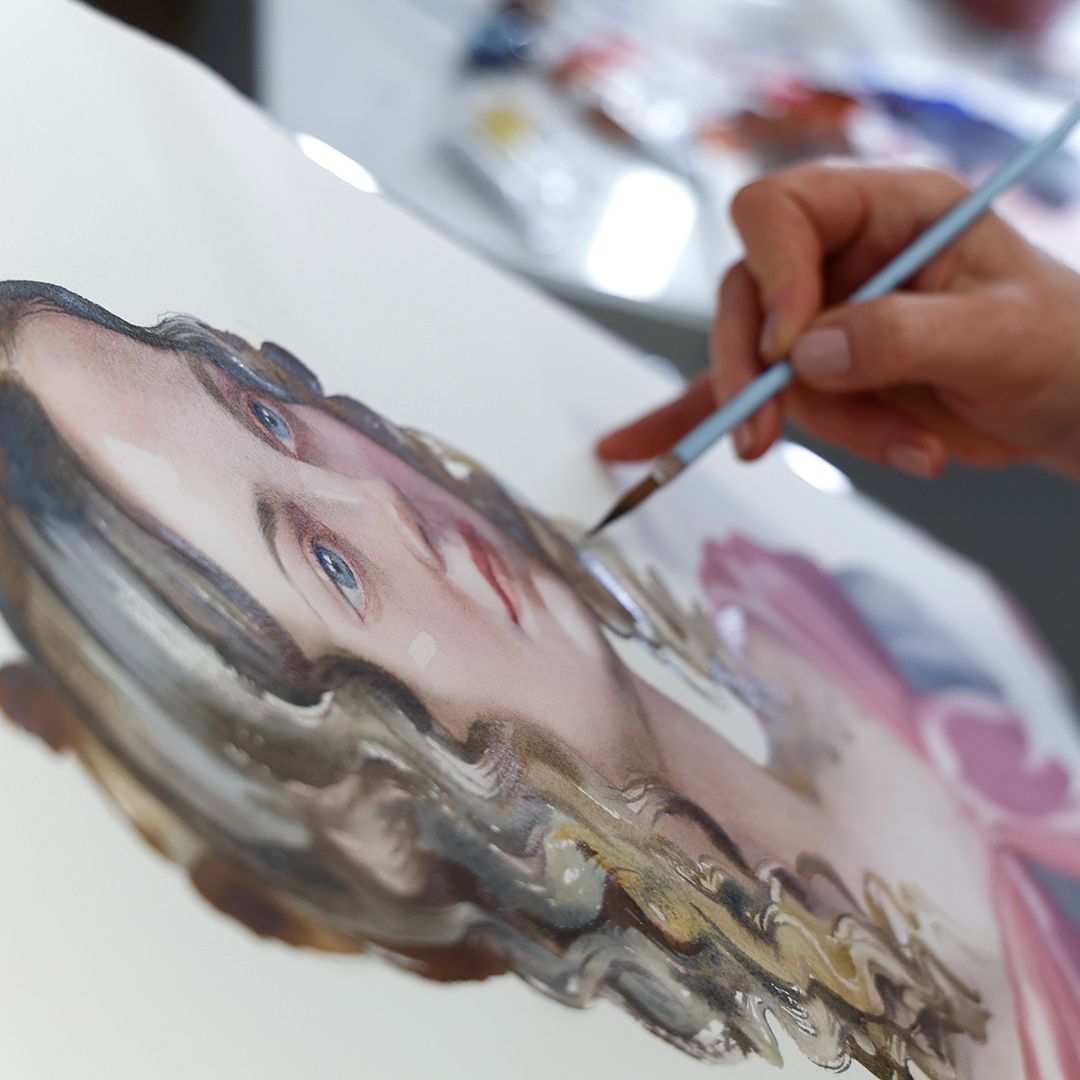
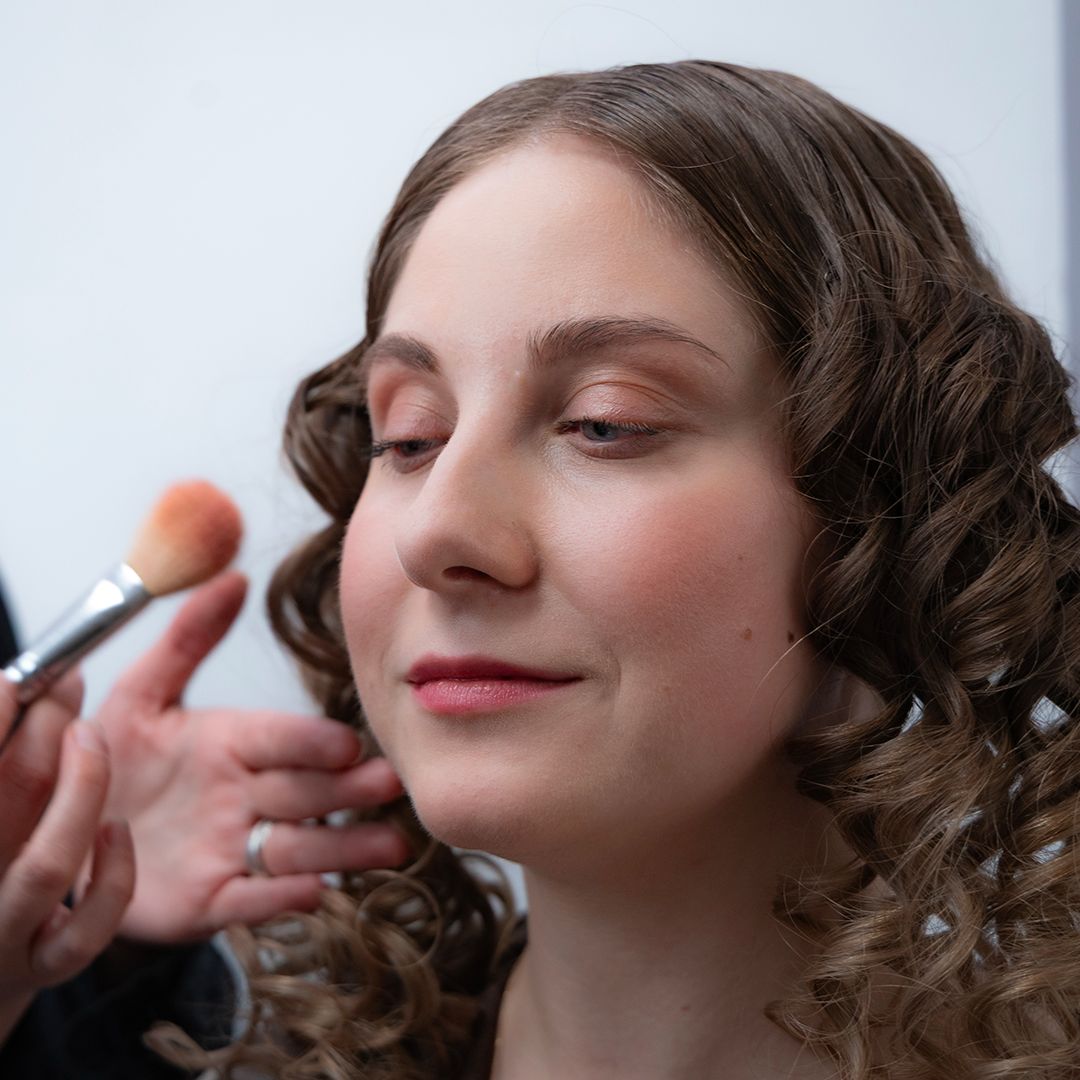
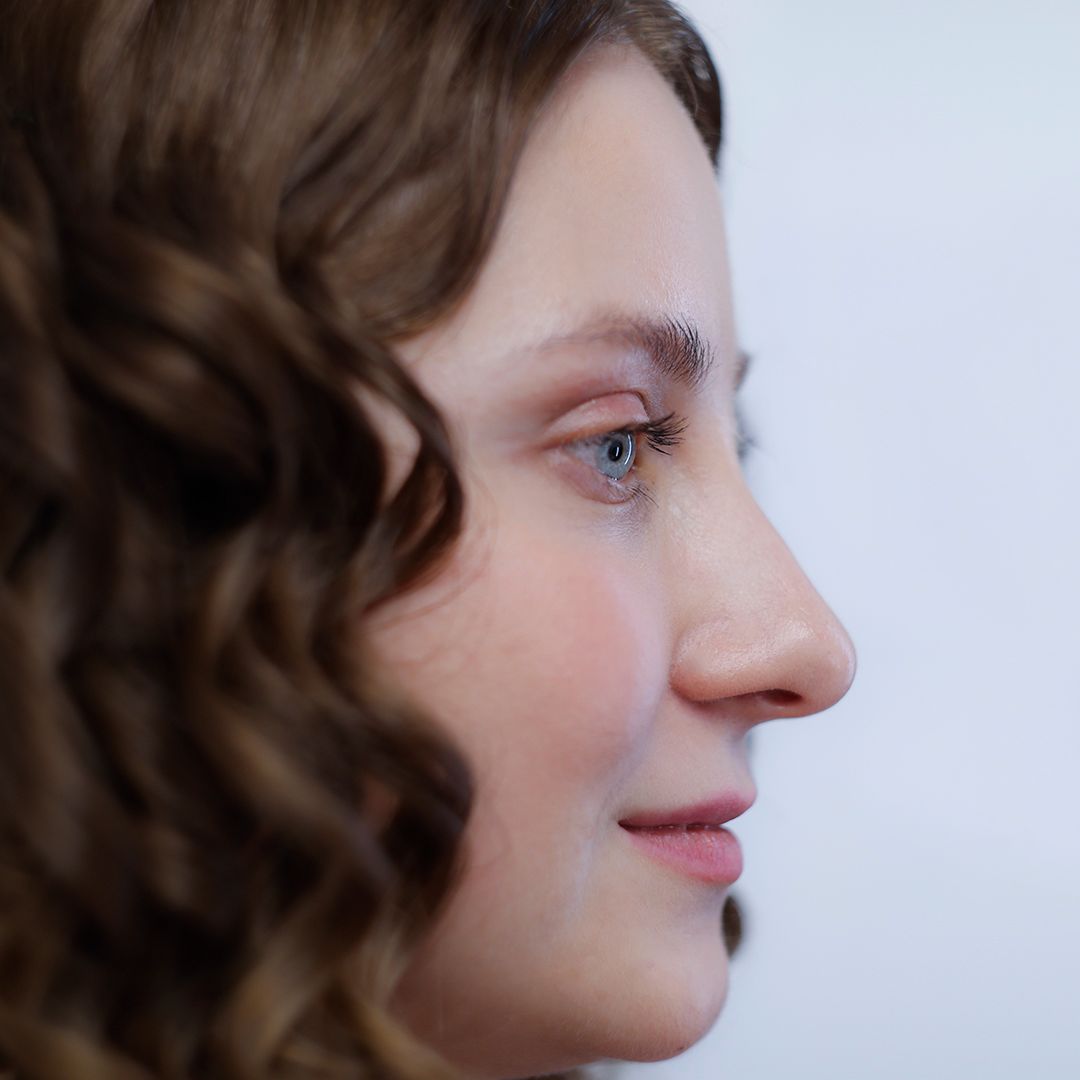
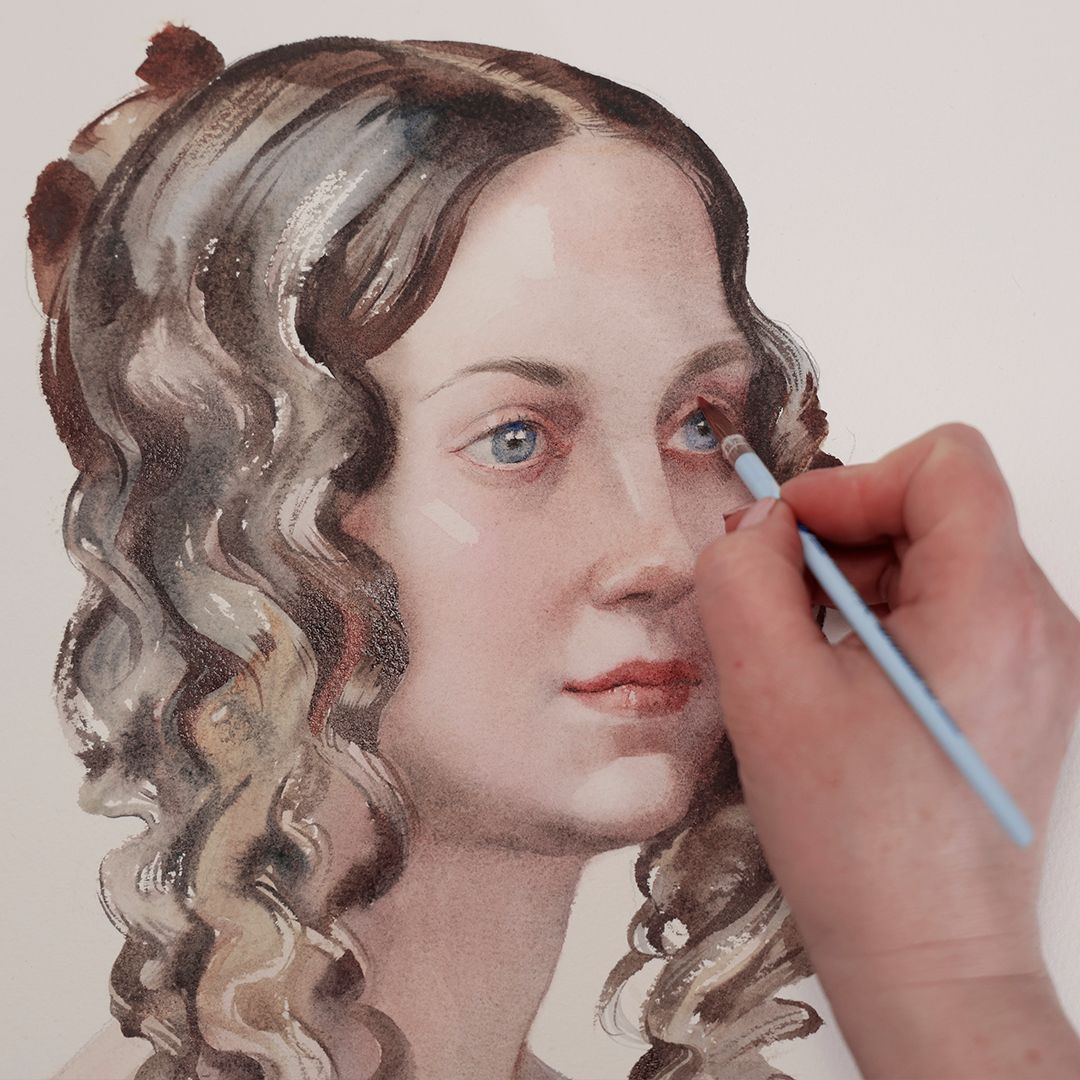
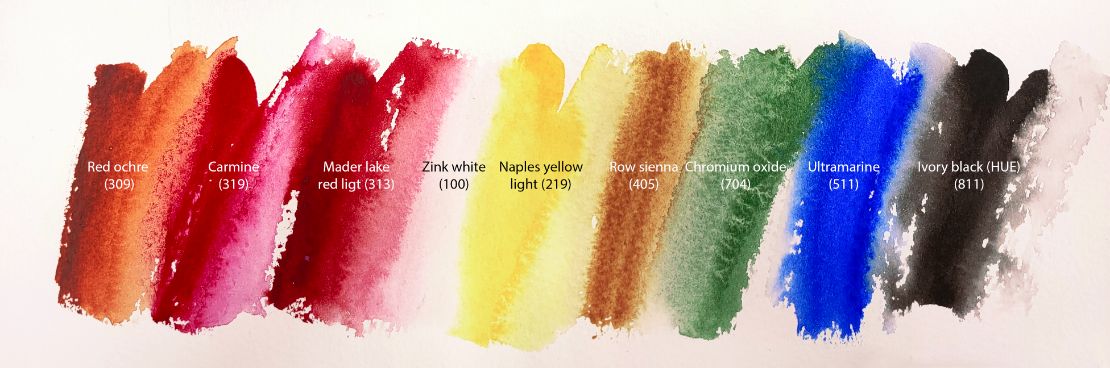
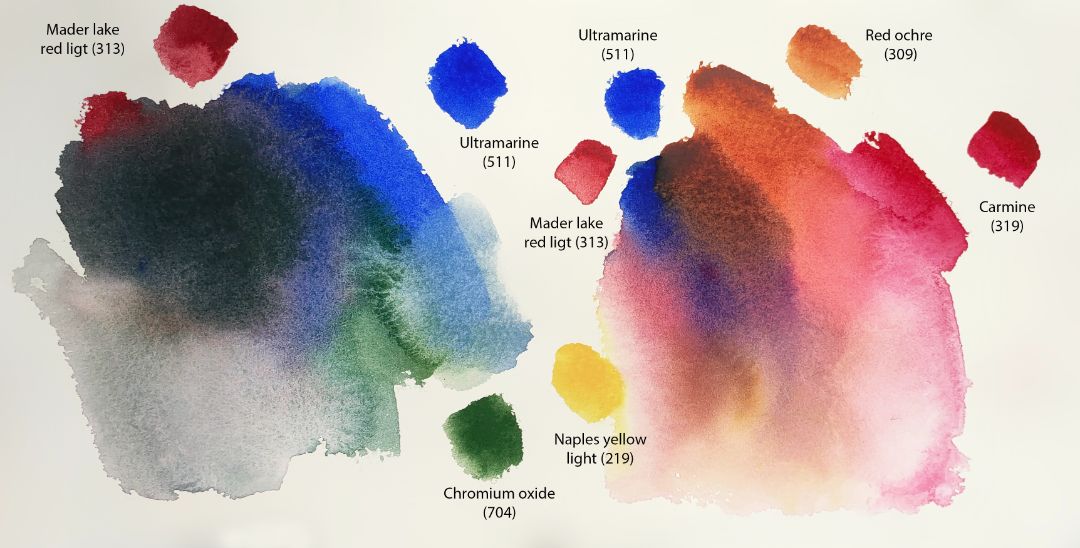
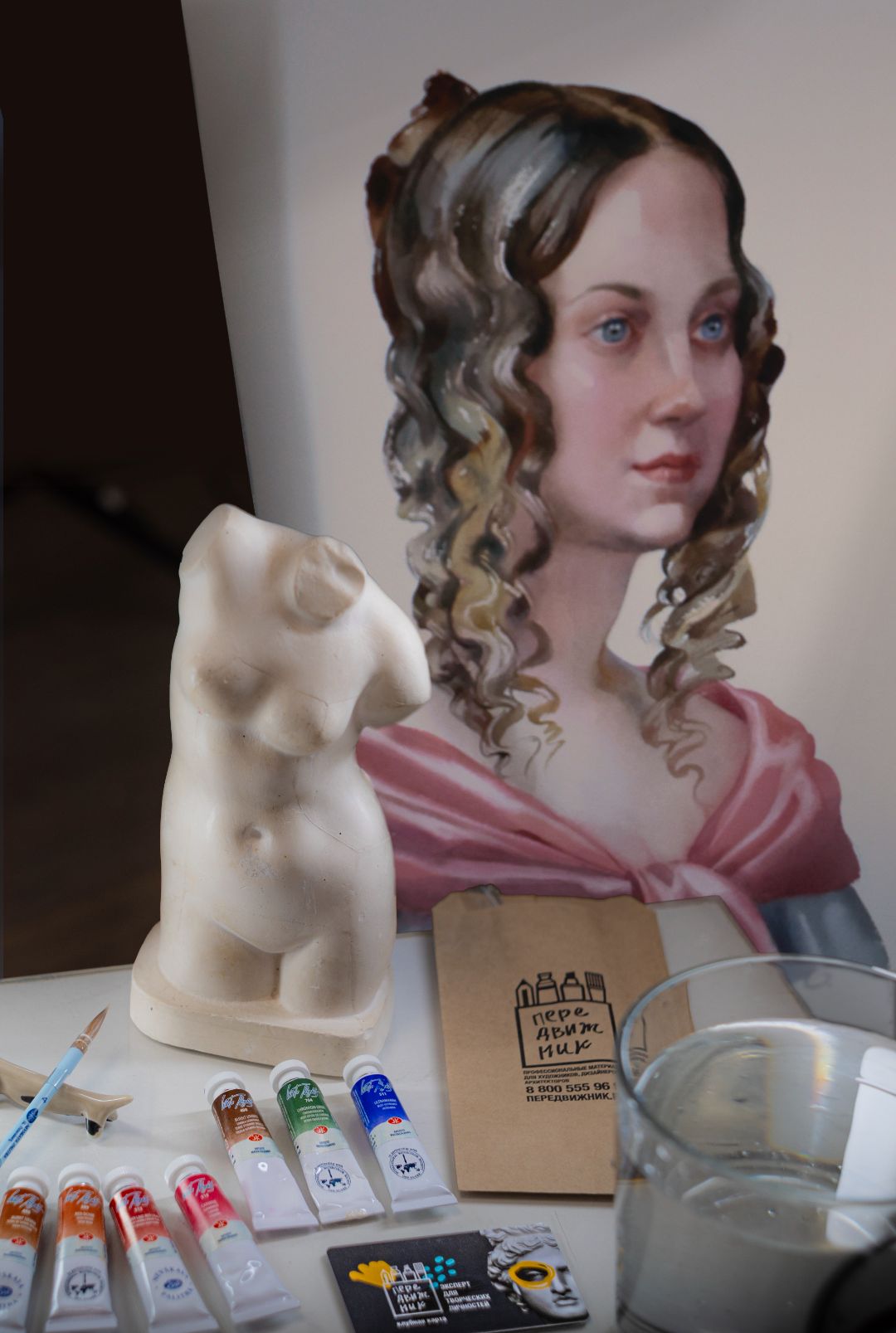
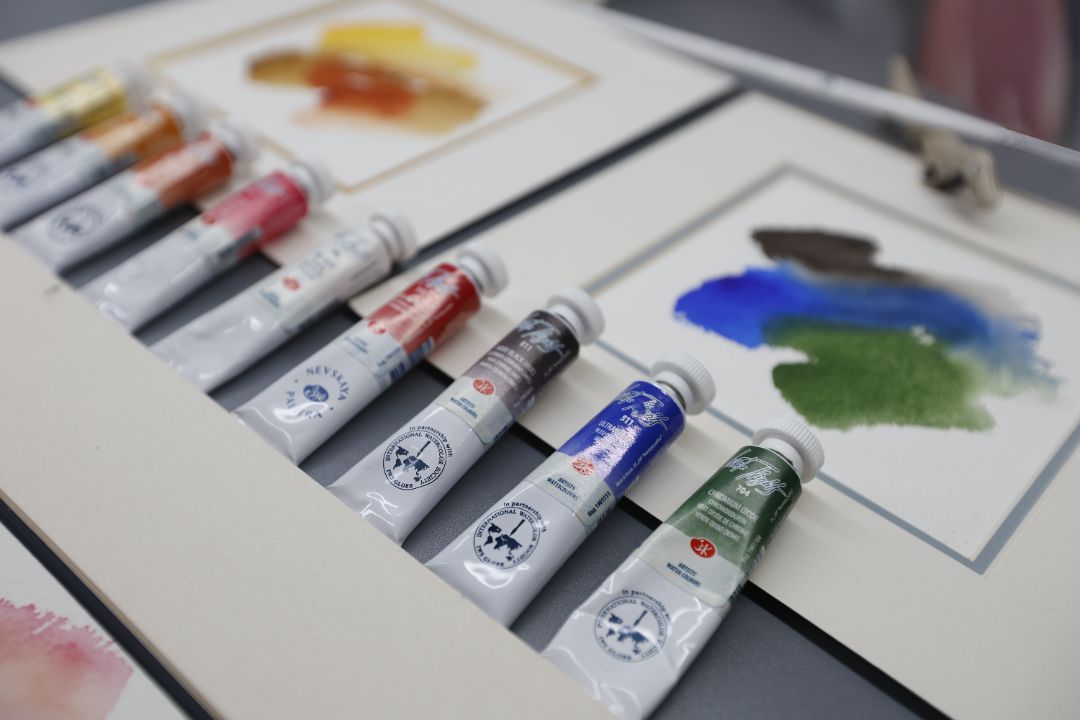
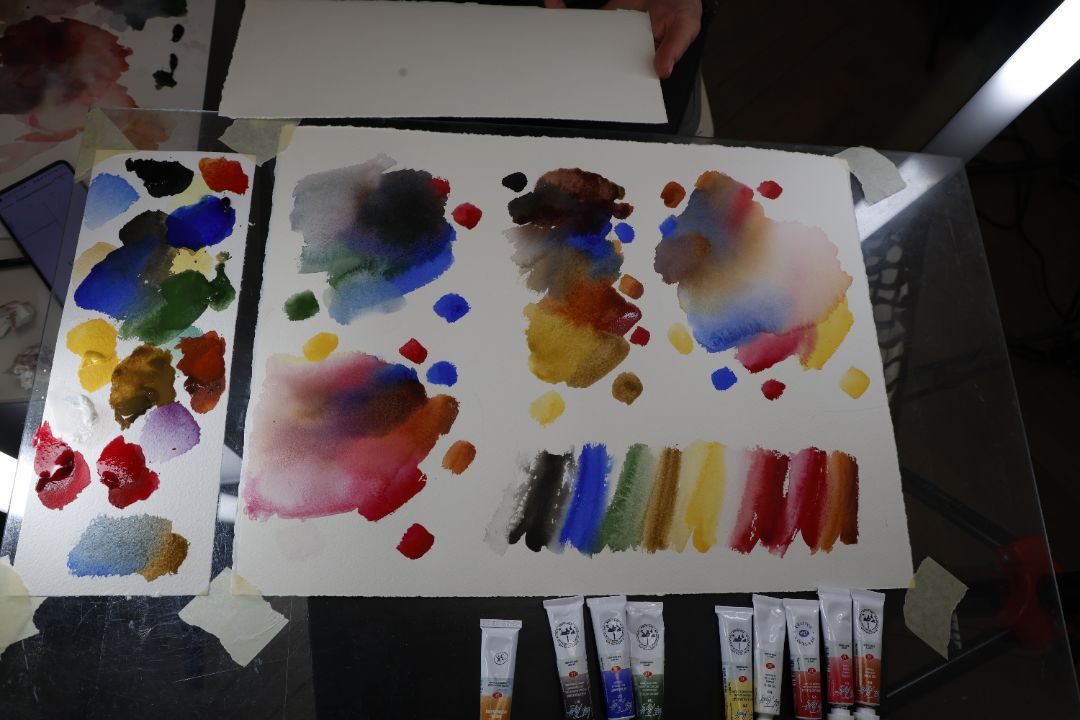
Watercolour artist Elena Bazanova has recreated a palette close to Karl Bryullov's colour schemes using modern "White Nights" watercolours. Although some 19th-century paints are no longer produced, their modern equivalents are created with careful attention to tradition—stable, safe, and durable, while preserving the character and vibrancy of the original hues. Many traditional colours have survived virtually unchanged, allowing modern artists to share the same artistic language as the artists of the past. Our palette includes:
- 309. Red ochre (P.R.102 *** ◨△)
- 319. Carmine (P.V.19 *** □▲)
- 313. Madder Lake Red Light ( P.R.187 *** □◮)
- 100. Zinc white (P.W.4 *** ◨△)
- 219. Neapolitan light yellow(P.Y.216 *** ■△)
- 405. Natural sienna (P.Y.43 *** ◨△ G)
- 704. Chromium oxide (P.G.17 *** ■△ G)
- 511. Ultramarine (P.B.29 ◨◮ G)
- 811. Ivory black (А) (P.R.102, P.Bk.7 *** ◨◮)
This session is more than just a portrait session. It's an exploration of the unbroken line of craftsmanship carried on by contemporary artists, inheriting and developing the experience of the academic school. It demonstrates that art rooted in tradition never loses its power—on the contrary, it reveals new facets thanks to modern materials and the artists' profound responsibility to history.

eye shades

lips shades

skin tones
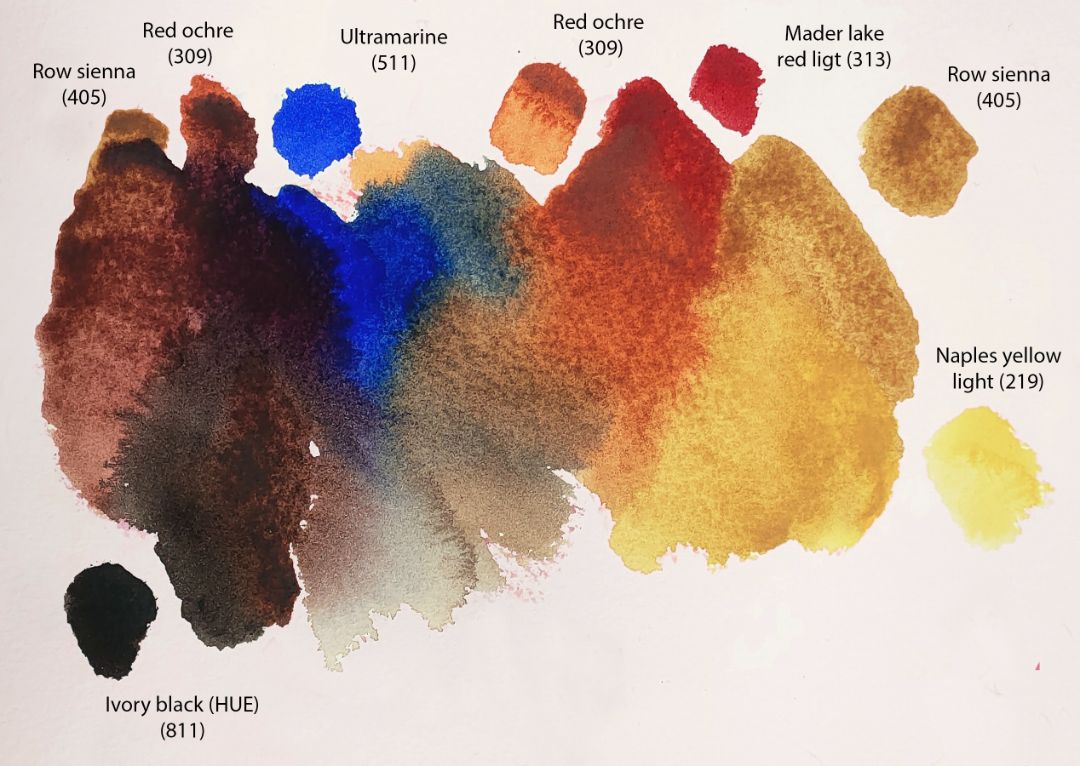
hair shades
shades of silk
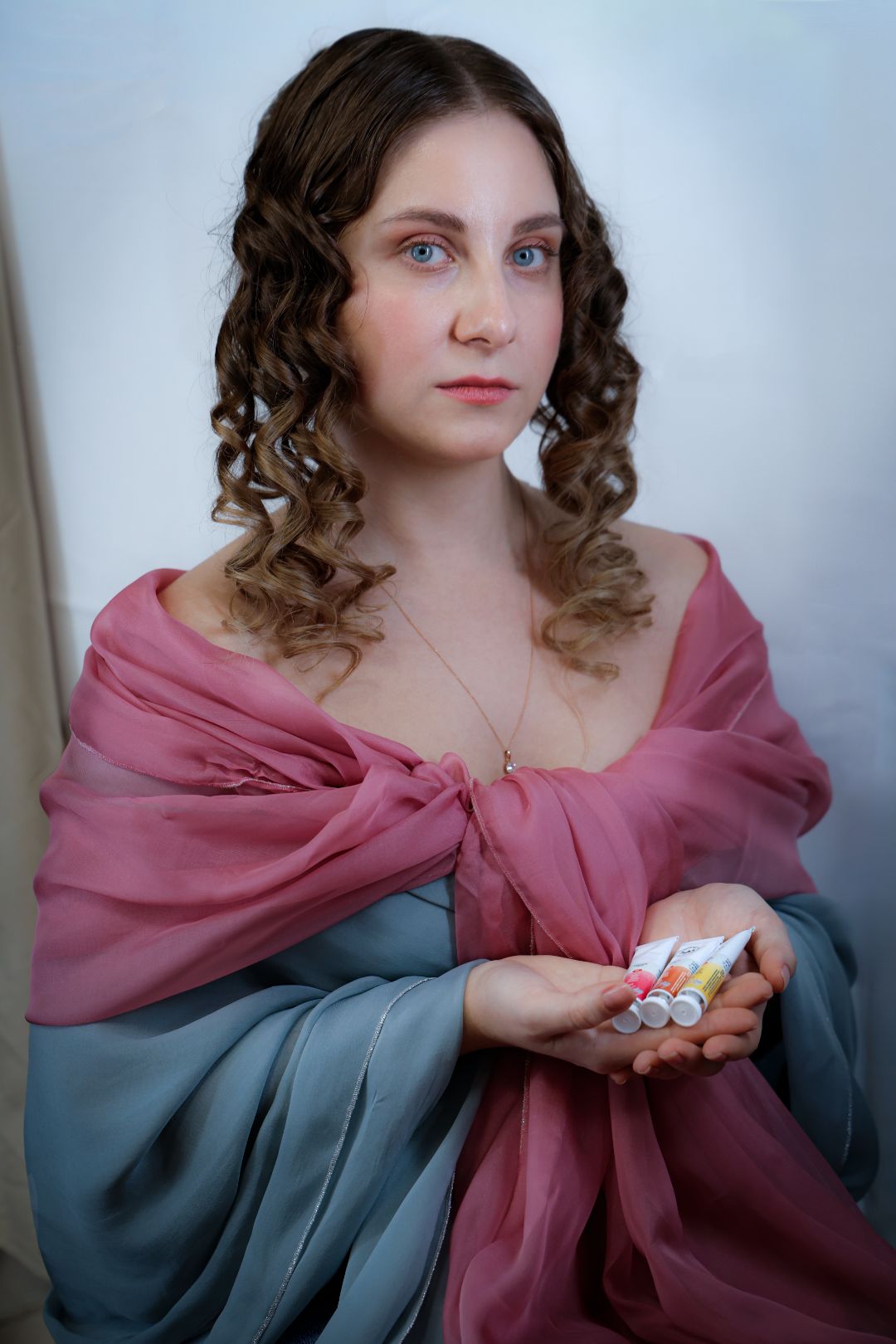
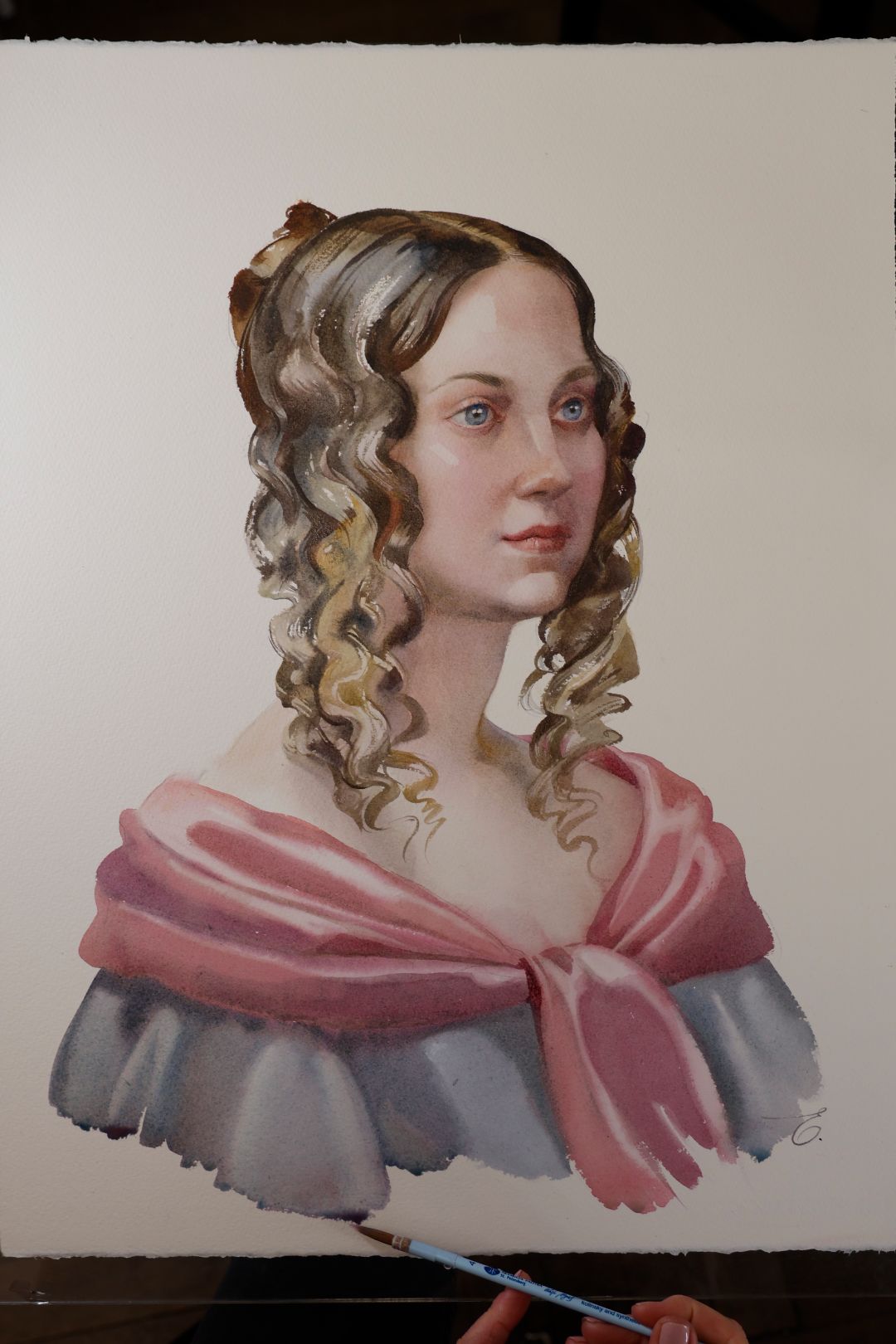
The project's goal is to demonstrate the viability of contemporary watercolours as a medium for creating authentic works of art worthy of galleries and museums. It's an opportunity to highlight the great school of Russian academic painting, its unique discipline, nobility, and pursuit of the ideal. And at the same time, it highlights the continuity that persists not only in the artists' skill but also in traditional paint-making techniques, time-tested and rooted in respect for the past.
As a result, the viewer will see not simply the process of creating a watercolour portrait, but a vibrant interplay between history and modernity—proof that true artistic traditions live on, inspiring a new generation of creators. Enjoy!

References:
- Solovyov V. D. — Karl Bryullov. Life and creativity
- Snegireva I. A. — Karl Pavlovich Bryullov
- Lyamin B. S. — Russian artists of the 19th century: techniques and materials
- Kiplik D. I. — Painting technique
- Makarova T. E. — Materials and techniques of painting of the XVIII–XIX centuries
- Grimm Yu. A. — Art materials: history and properties
- The Russian Museum — Scientific and restoration reports
- Tretyakov Gallery — Scientific and restoration works