DIALOGUE OF THE EPOCHS: AUGUST JOHANN RÖSEL VON ROSENHOF. MASTER OF THE MICROCOSM — THE ARTIST WHO IMMORTALISED THE BEAUTY OF INSECTS
August Johann Rösel von Rosenhof (1705–1759) was a German artist, engraver, naturalist, and one of the most outstanding natural history illustrators of the 18th century. His work stands as a rare example of a harmonious union between science and art: he did not merely depict insects and small animals, but meticulously studied their anatomy, behaviour, and life cycles. Beneath the pen and brush of this German naturalist and artist, invisible worlds came to life — the iridescent wings of butterflies, the fantastical carapaces of crayfish, the elegant antennae of beetles. Rösel was not simply an illustrator; he was a passionate investigator who elevated the study of the minutest creatures into a high art. At a time when entomology was still in its infancy, his works became a window into nature’s unimaginable diversity.
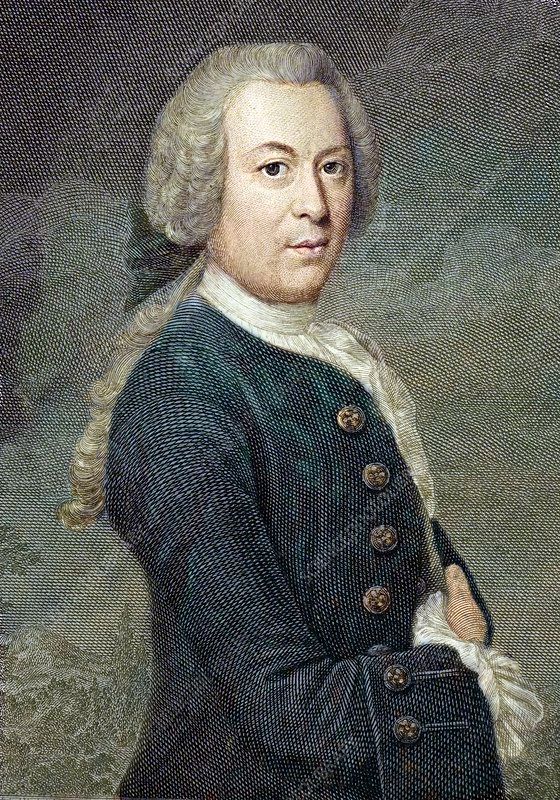
1759 Rosel von Rosenhof colour portrait
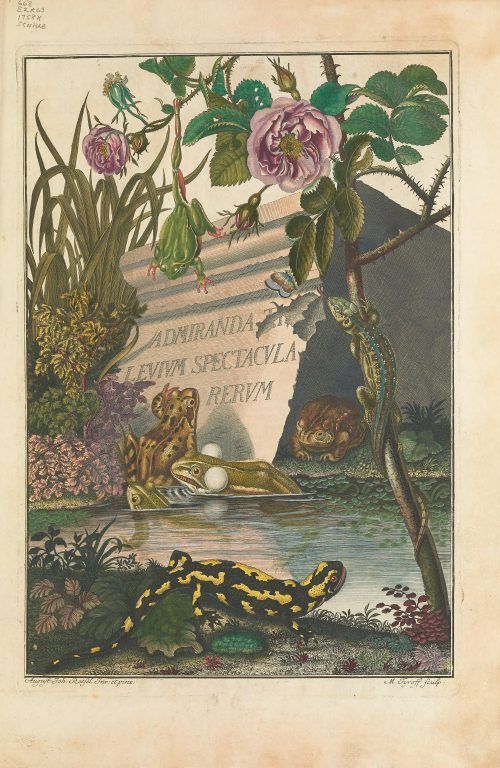
Historia naturalis ranarum nostratium. 1758.
BIOGRAPHY: FROM CHORISTER TO NATURALIST
Rösel, a descendant of a notable Austrian family, was born in Arnstadt (Thuringia) under the name August Johannes Rösel. This name was changed in 1753, undoubtedly in honour of his uncle, the animal painter Wilhelm Rösel von Rosenhof. He was greatly influenced by the works of Maria Sibylla Merian — the celebrated artist and entomologist.
However, his true passion was nature. Whilst studying drawing and engraving at the University of Jena, he concurrently pursued the natural sciences. A turning point came during his work as a tutor for a wealthy family in Lüneburg, where he gained access to an extensive library and the opportunity to assemble his first insect collections.
In 1733, Rösel moved to Nuremberg — a centre of art and science. There he founded his own workshop and devoted himself entirely to the observation and artistic representation of insects, amphibians, and crustaceans. His home became a veritable salon, alive with scientific debate and adorned with watercolours of beetles and butterflies. In 1749, in recognition of his services to science, he was elevated to the nobility, acquiring the prefix “von Rosenhof”.
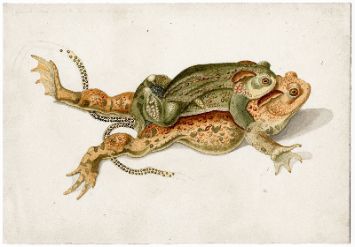
Copulating Frogs Folio Copperplate Engravings from Roesel von Rosenhof
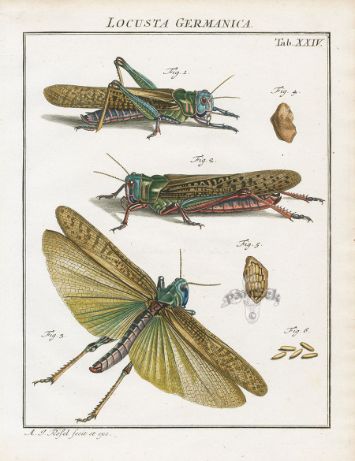
Locusts from Roesel von Rosenhof

Scarabaeorum terrestrium praefat from Roesel von Rosenhof

Scorpion from Roesel von Rosenhof
CREATIVE PATH AND SCIENTIFIC CONTRIBUTION
Rösel conducted his own observations: he bred insects at home, observed their transformations from larvae into adults, and documented changes in form and colour. His illustrations were distinguished by remarkable accuracy and meticulous attention to detail. He depicted not only external appearance but also stages of development — eggs, larvae, pupae, and adults. It was precisely such images that made his works invaluable to European taxonomists.
Rösel combined the scrupulous precision of a scientist with the aesthetic sensibility of an artist. His principal work is the multi-volume Insecten‑Belustigung (1746–1761). This was no dry encyclopaedia, but an engaging narrative in which each insect appeared as a unique character with its own “biography”. He detailed metamorphoses, behaviour, and habitats, making numerous discoveries along the way, including a thorough study of mosquito development.
His work on crustaceans was particularly significant. In Die monatlich herausgegebenen Insecten‑Belustigung he presented exquisitely detailed illustrations of crayfish, crabs, and other arthropods, laying the groundwork for their scientific classification. His images were so precise that they continued to be used by biologists for decades.
TECHNIQUE AND MATERIALS: SECRETS OF AN ENTOMOLOGIST’S PALETTE
The majority of his works were copperplate engravings subsequently hand‑coloured. No direct records of the artist’s precise pigment formulas have survived. However, it is known that masters of that era used watercolour and natural pigments. Rösel worked primarily in watercolour and gouache, sometimes making preliminary sketches in graphite or pen. His colours were notable for their freshness and durability.
In the 18th century, artists often prepared their own pigments. Rösel likely used:
- Natural minerals: ochre (yellow and brown tones), umber, green earth
- Plant‑based dyes: indigo (blue), madder (red), saffron (yellow)
- Expensive imported pigments: carmine (from cochineal), ultramarine (from lapis lazuli), lead white
- Metallic pigments: powdered gold and silver to lend a sheen to beetles’ wings
Pigments were obtained from apothecaries or prepared by the artist himself through grinding minerals or boiling plants. He favoured thick paper, often lightly tinted in pale shades, to emphasise the brilliance of colour.
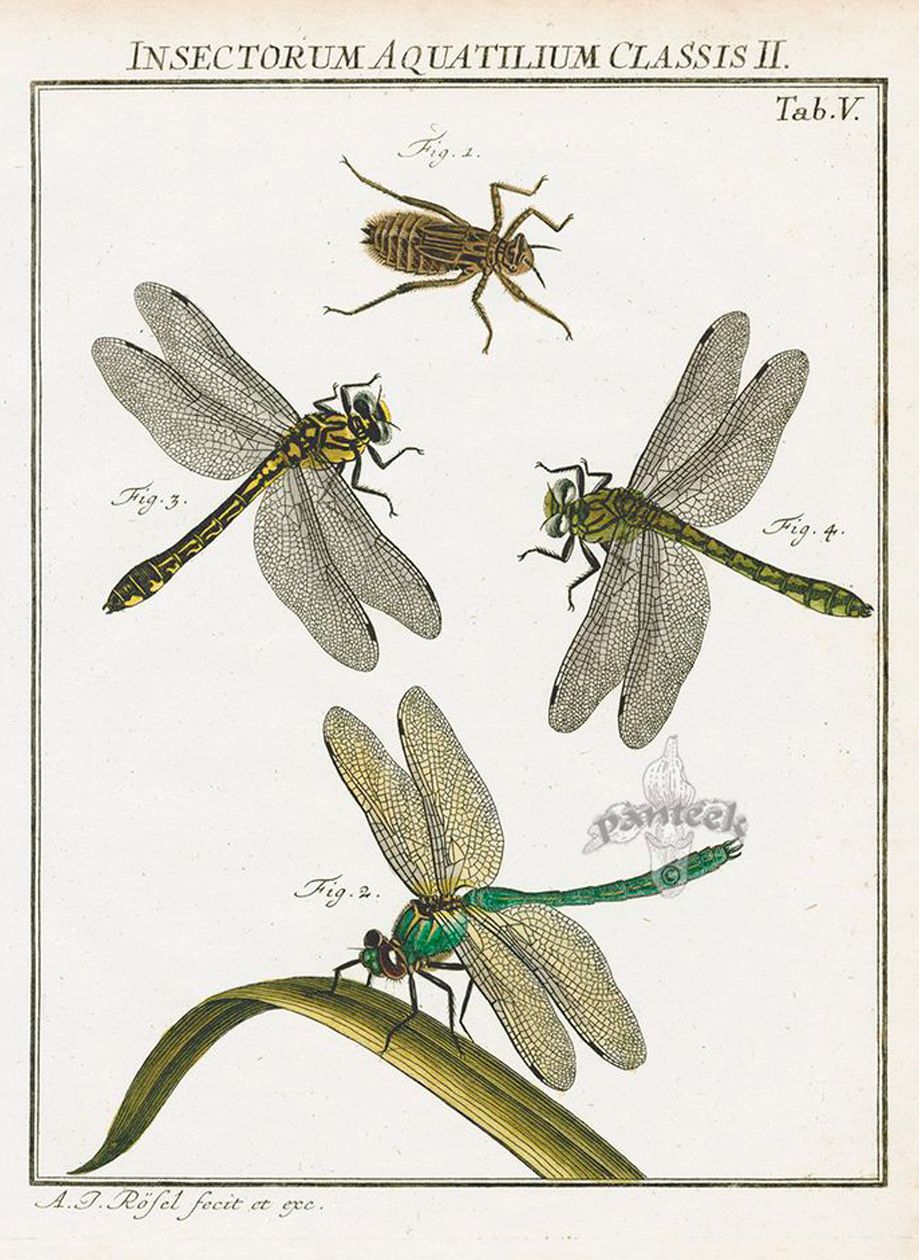
Dragonfly from Roesel von Rosenhof
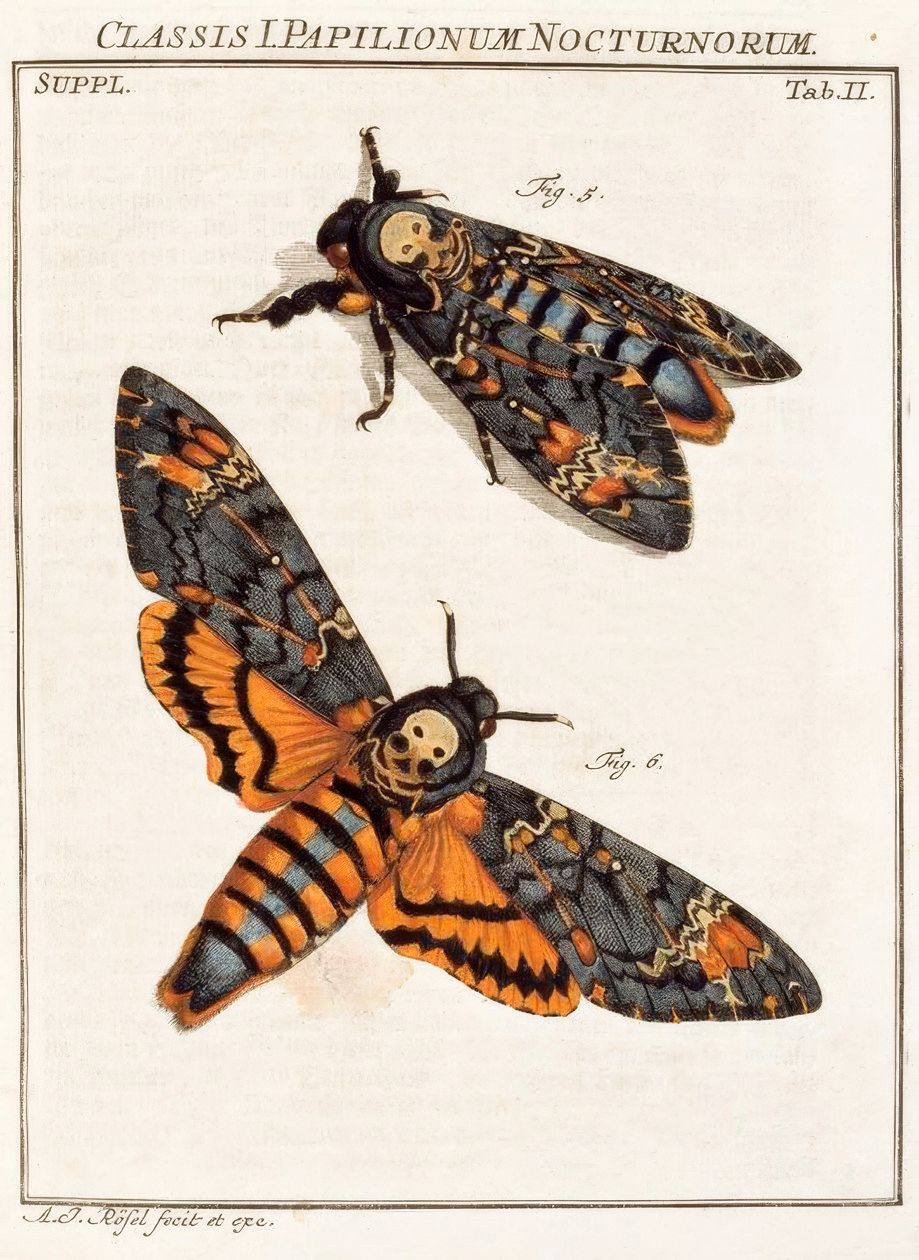
Butterfly from Roesel von Rosenhof

Locusta Indicafrom Roesel von Rosenhof
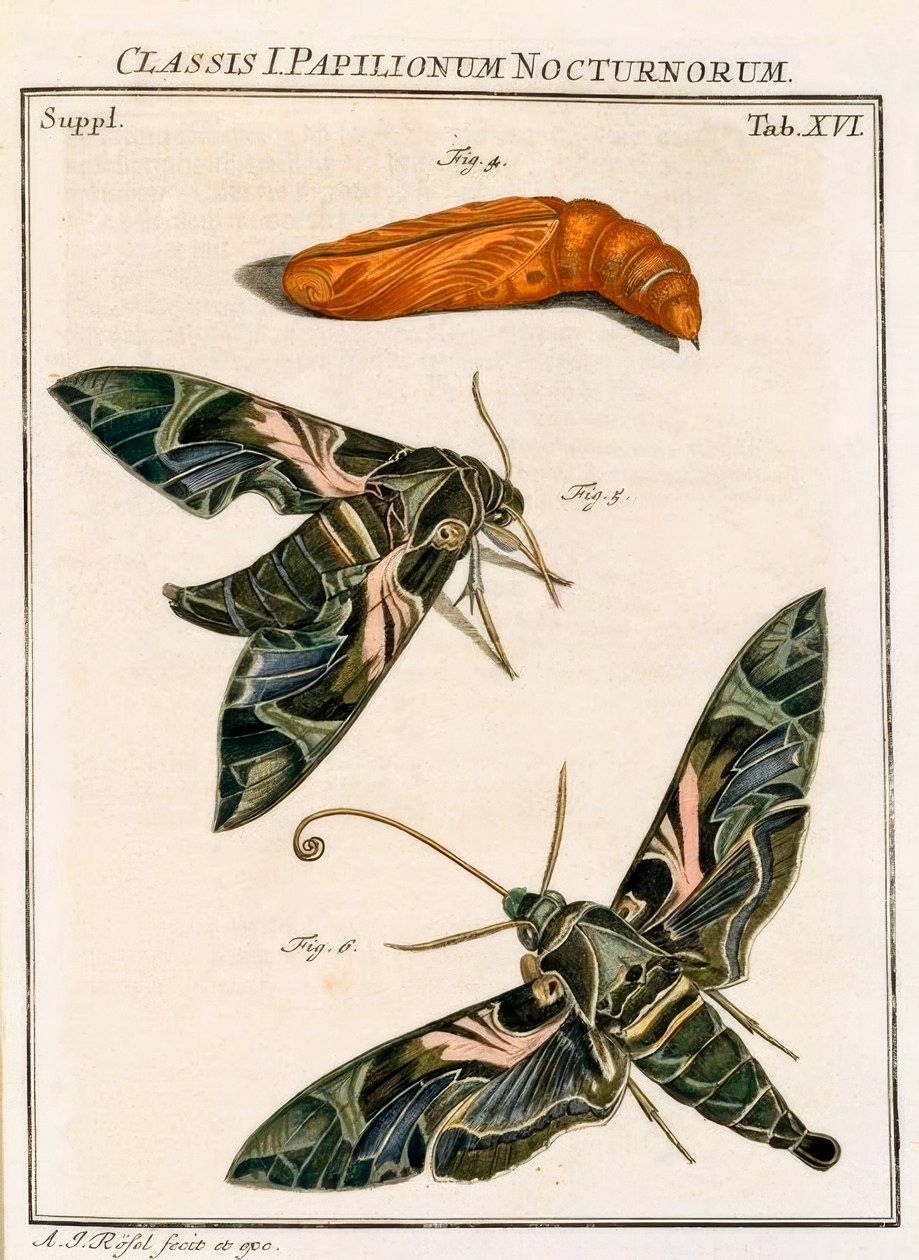
Butterfly Daphnis nerifrom Roesel von Rosenhof
WHERE TO SEE THE WORKS
Original watercolours and engravings by Rösel are held in several prestigious European institutions:
- The Natural History Museum, London
- University Library of Erlangen–Nuremberg
- Germanisches Nationalmuseum, Nuremberg
- Staatliche Kunstsammlungen Dresden
Many illustrations have now been digitised and are accessible through the online archives of these institutions.
INTERESTING FACTS
- Rösel used a microscope for observation — a rarity in his time
- Numerous species of insects and crustaceans have been named in his honour
- His works were used by Carl Linnaeus in the development of his classification system
- He often gave insects poetic names, comparing them to mythological characters
- His daughter assisted in hand‑colouring engravings
- Legend has it that he could lie for hours observing an anthill
- He criticised theories of spontaneous generation
LEGACY
PAINTING SESSION IN ELENA BAZANOVA'S STUDIO

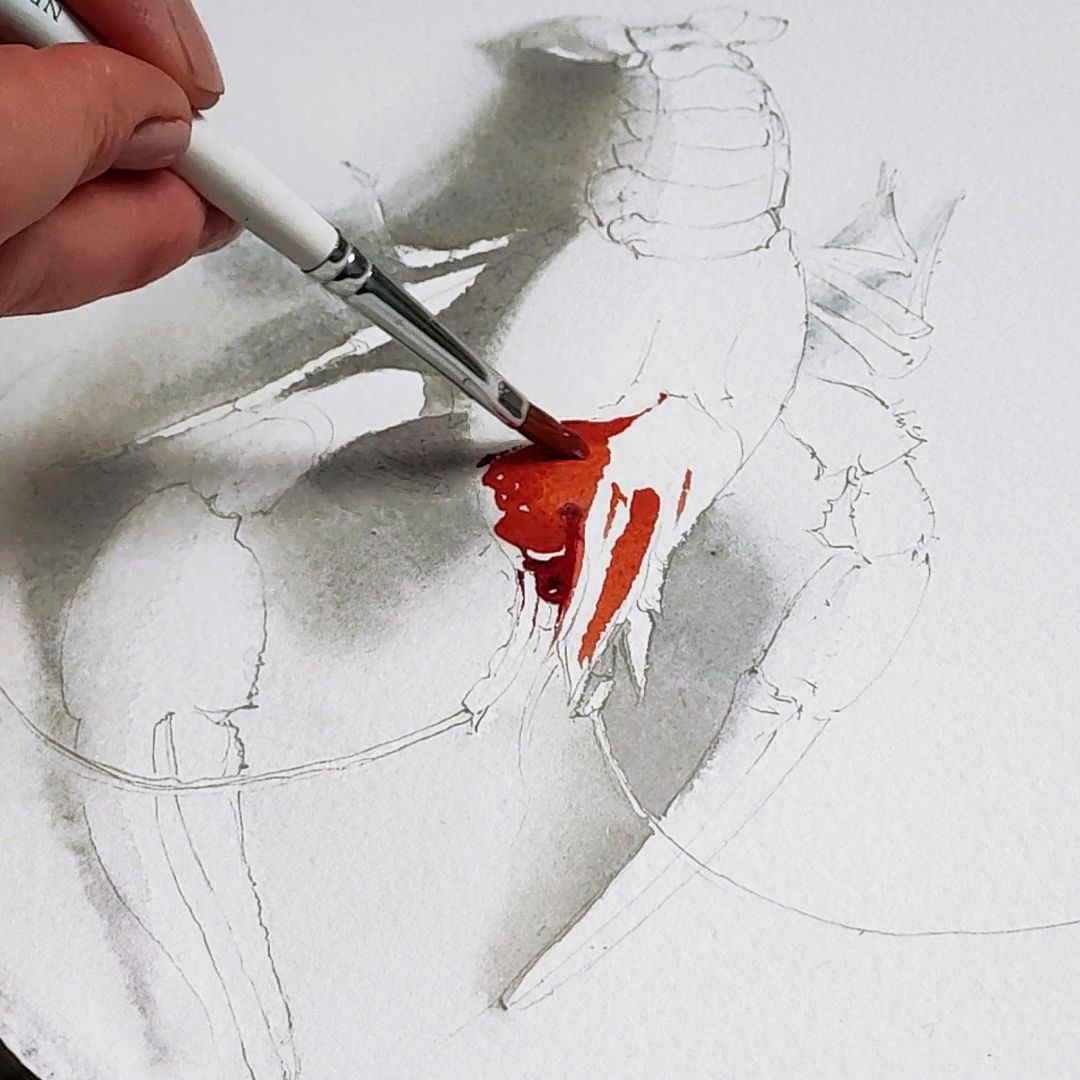
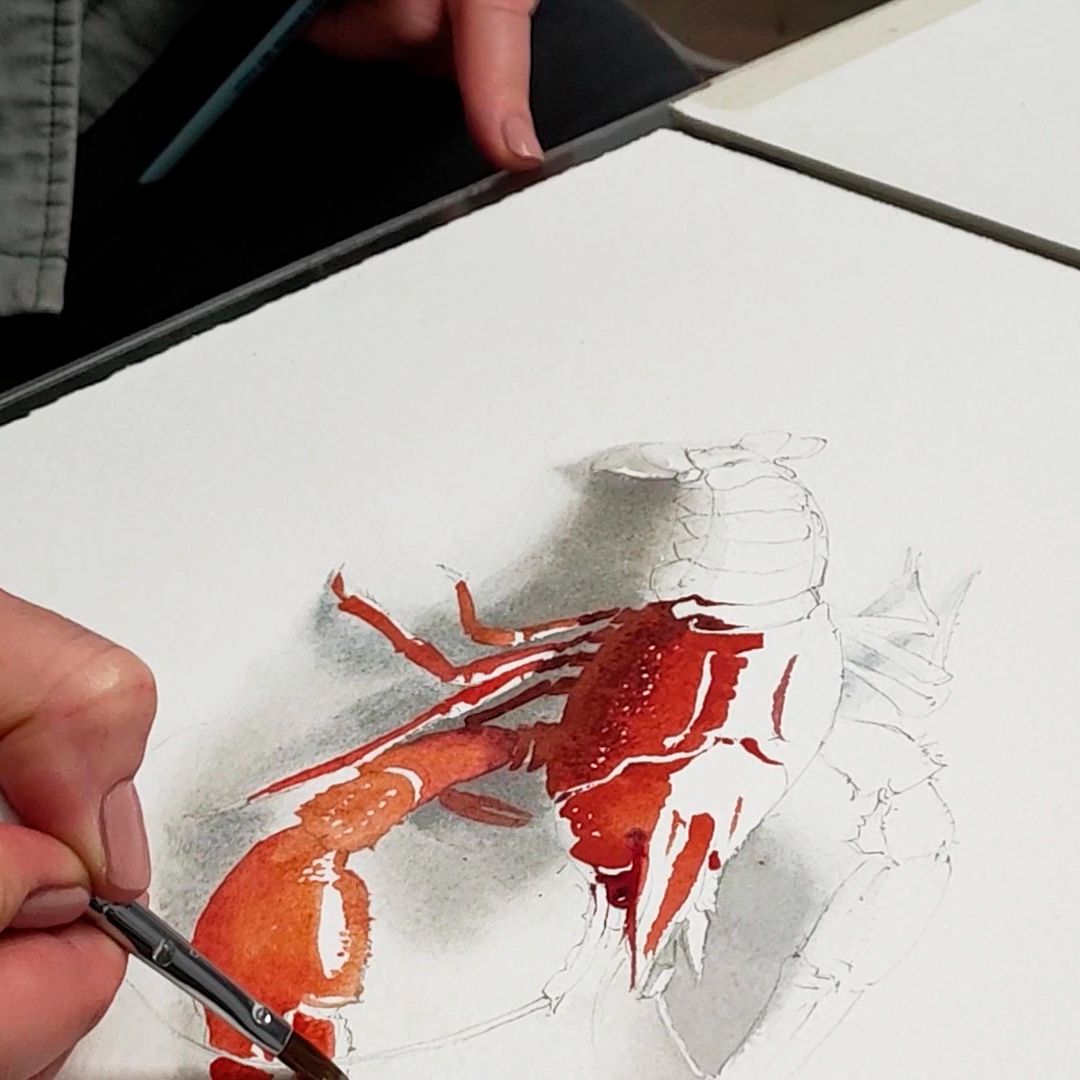
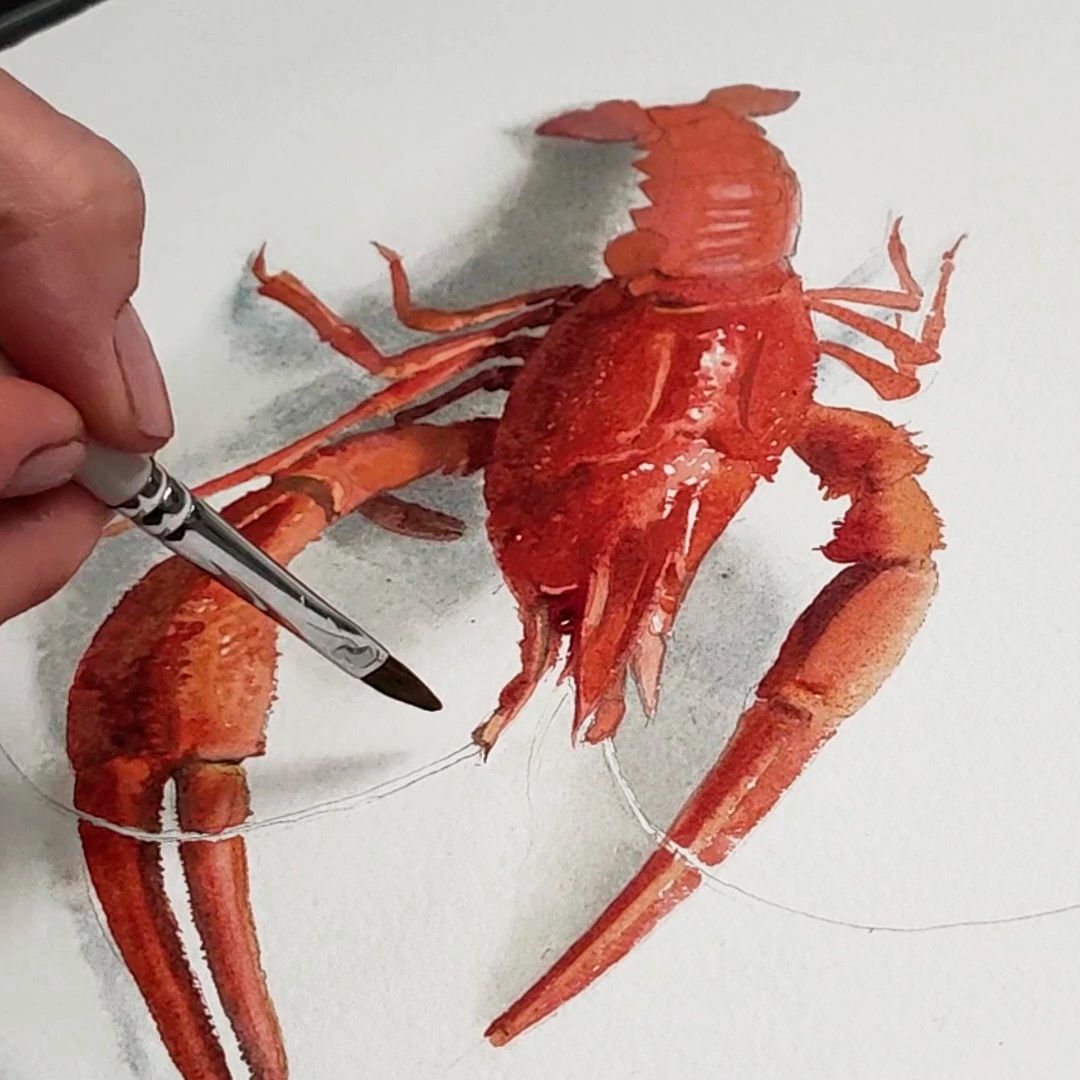
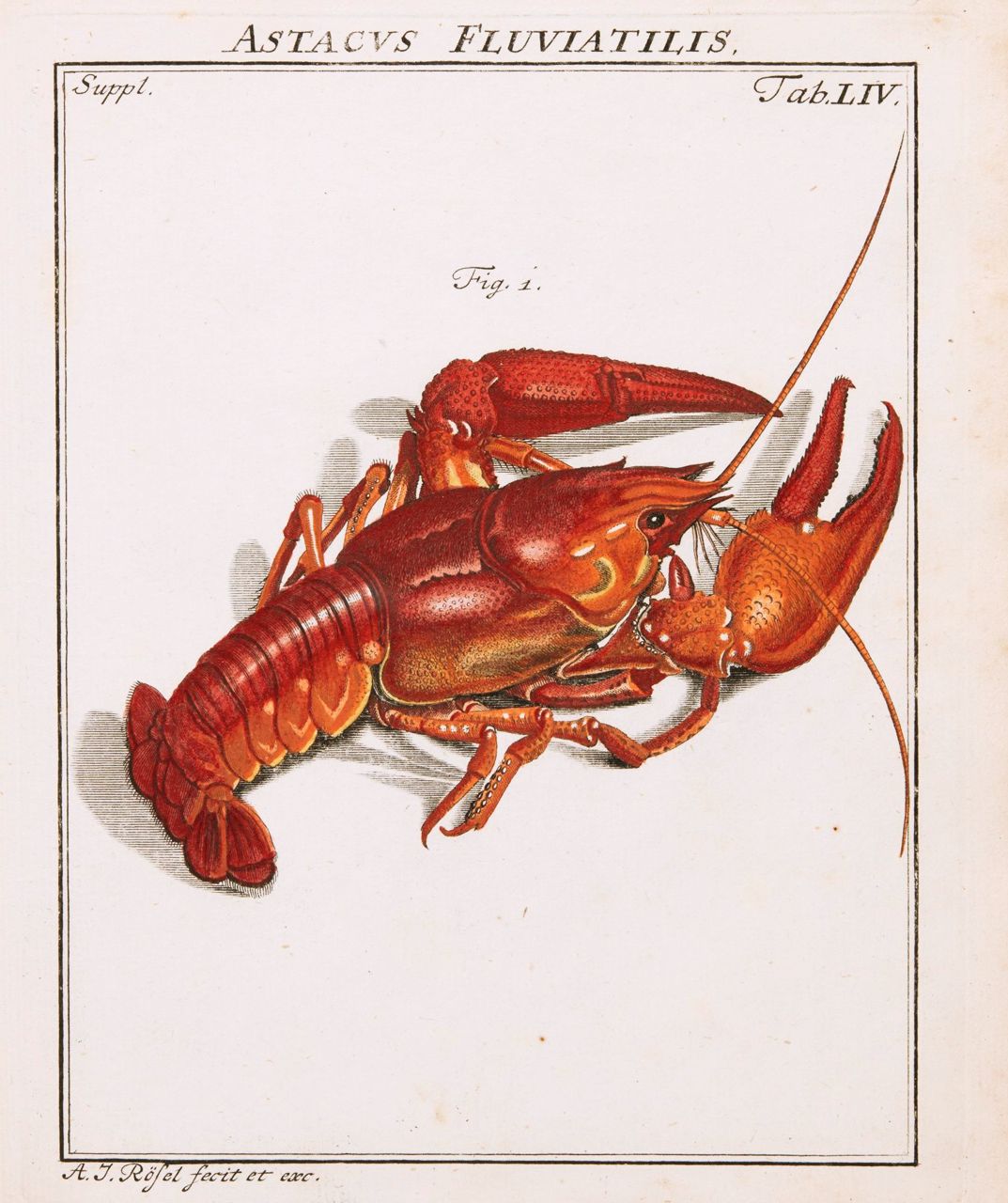
LOBSTER. RÖSEL VON ROSENHOF
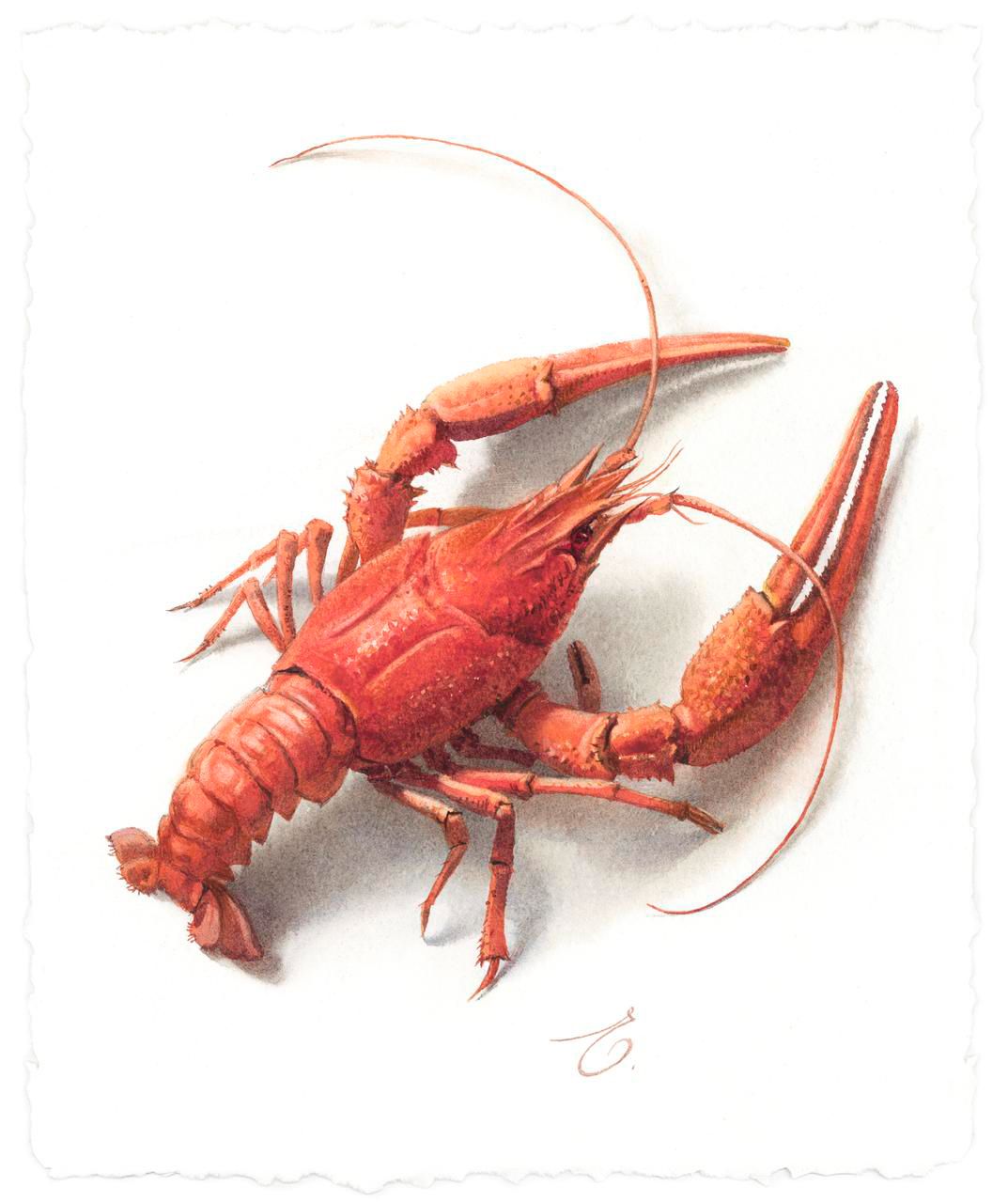
LOBSTER. ELENA BAZANOVA
The contemporary White Nights watercolours will help Elena Bazanova recreate a palette akin to that used by Rösel. Although many 18th-century pigments have disappeared, their modern equivalents retain authentic character while offering improved durability and safety. Because so many traditional colours remain unchanged, artists of different eras can speak the same visual language.
The creation of this illustration forms part of a broader study tracing how the classical school of painting is reflected in the work of a contemporary master, and how tradition, when engaging with new materials, remains relevant and profound.
The aim is to demonstrate that modern watercolour is worthy of museum display and to discuss the fundamental values of classical art — discipline and the pursuit of an ideal. These principles live on not only in technique but also in the paints themselves, which are created with a keen awareness of history.
PALETTE

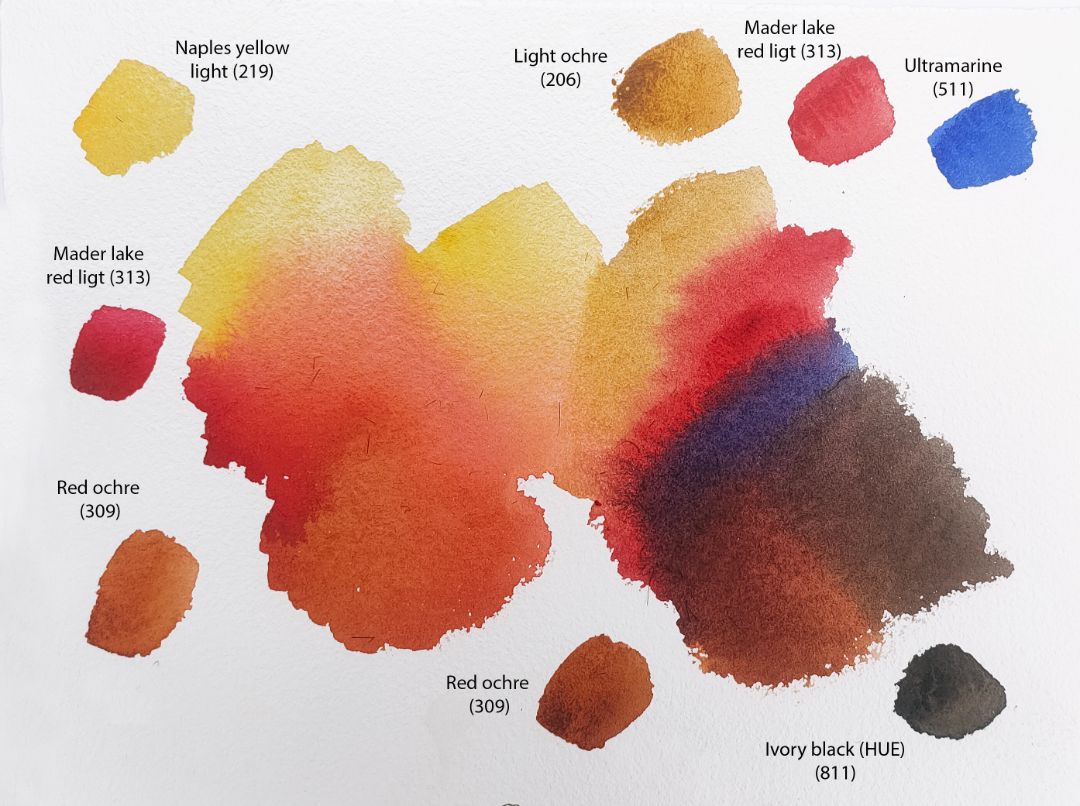
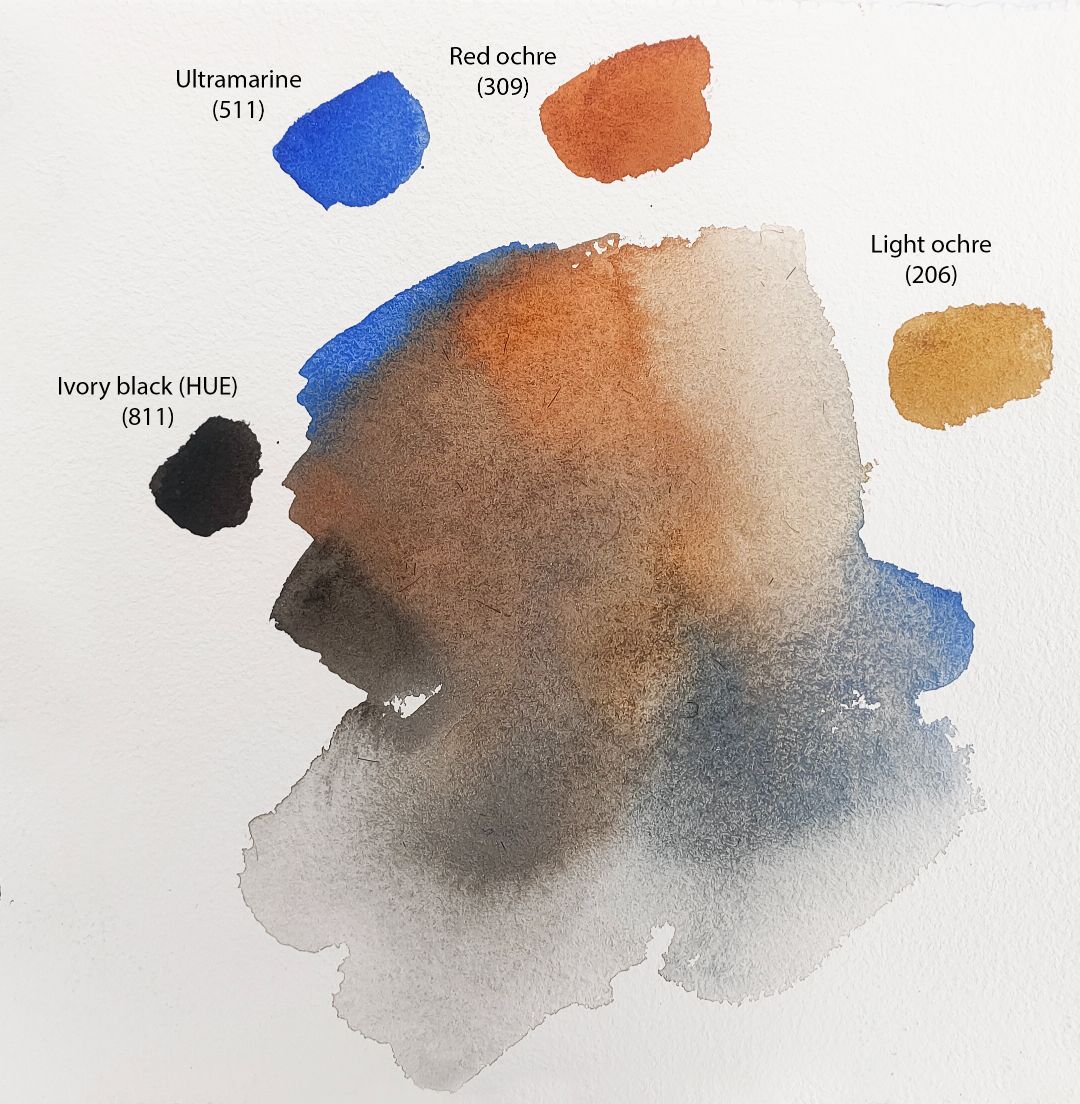
You will witness a dialogue between history and modernity in real time — a compelling demonstration that genuine artistic traditions continue to live and inspire. We invite you to enjoy the process.
References:
- Rösel, A.J. Insecten-Belustigung. Vol. 1–4. Nürnberg: J.J. Fleischmann, 1746–1761
- Rösel, A.J. Historia naturalis ranarum nostratium. Nürnberg, 1758
- Feigen, R. August Johann Rösel von Rosenhof: Leben und Werke. In: Natur und Museum, 1955, pp. 123–130
- Westwood, J.O. The Art of the Entomologist: The Golden Age of Insect Illustration. London: Thames & Hudson, 1989
- Nissen, C. Die zoologische Buchillustration. Vol. 1. Stuttgart: Hiersemann, 1969
- The Insect in Art, ed. E. Holm. Copenhagen, 1979
- Nickel, G. Der Nürnberger Naturforscher und Kupferstecher August Johann Rösel von Rosenhof. 1992
- The Biodiversity Heritage Library online archive